“If then you were raised with Christ, seek those things which are above, where Christ is, sitting at the right hand of God.” (Colossians 3:1)
My Beloved Brethren, Christ is Risen. He is Risen indeed.
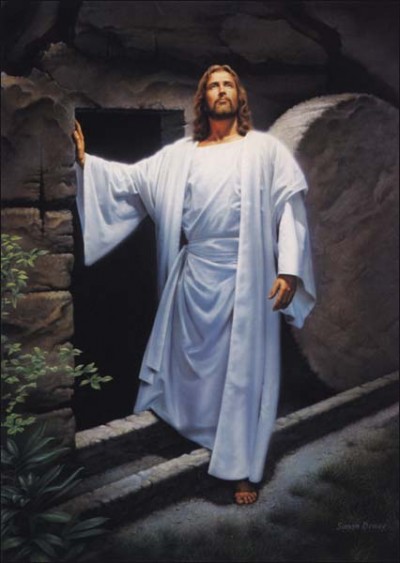
On this glorious day, as we commemorate the blessed Resurrection of our Lord Jesus Christ, I would like to extend my hearty wishes to all of you praying to the Risen Lord to grant us His Resurrection and make it real in our life.
The Lord’s passionate and Holy Crucifixion followed by His Holy Glorious Resurrection inspires a newness of spirituality within our Coptic Church, our Coptic families, and each Christian individual’s heart. It is a time when we truly profess our belief in the pain-rendering events of the Holy Crucifixion and in the Glorious mystery of the awe inspiring Resurrection of the only One raised from the dead and who sits at the right hand of God.
This blessed event poses four major questions to contemplate:
What is the Holy Resurrection?
How did the Lord’s Resurrection become our Resurrection?
How do we attain Resurrection?
How can we maintain the Lord’s Resurrection?
What is the Holy Resurrection?
The Lord Jesus Christ is considered the firstborn, the first fruit risen from the dead. The Holy Book of Revelation (1:5) describes our crucified and resurrected Lord as …”Jesus Christ, the faithful witness, the firstborn from the dead.” He was not raised by the prophets like Elijah and Elisha, but rather is and remains, the only person raised from the dead by the power of His Divinity, the Father in Heaven and the Holy Spirit. It is difficult for even the most scholarly to truly fathom the dimensions of the Lord Jesus Christ‘s death on the Holy Cross and His Resurrection and the impact of these insurmountable events on humanity in order that the faithful may experience eternity, the heavenly grandeur of the Father’s glory.
Tertulian, in the third century, testified saying, “Jesus is still sitting there at the right hand of the Father—man, yet God. He is the last Adam, yet, He is also the original Word. His flesh and blood, yet His body is purer than ours” (Tertullian c.210).
The Lord Jesus Christ was divinely heroic and heroically divine in His Holy Crucifixion bearing torment for our sins. Concerning the Holy and Glorious Resurrection of our Lord Jesus Christ, St. Paul teaches… “he [David], foreseeing this, spoke concerning the resurrection of Christ that His soul was not left in Hades, not did His flesh see corruption. This Jesus God has raised up, of which we are all witnesses” (Acts 2:31-32).
The Ante-Nicene Fathers have written concerning the Lord Jesus Christ’s Resurrection and the hidden life… “The whole nature of men in general is composed of an immortal soul and a body…One living being is formed from the two…This proves that a resurrection will follow of those dead and dissolved bodies. For without this, neither could the same parts be united according to nature with one another, nor could the nature of the same men be reconstituted…But that which has received both understanding and reason is man, not the soul by itself. Man, therefore, who consists of the two parts, must continue forever…The conclusion is unavoidable, that, along with the eternal duration of the soul, there will be a perpetual continuance of the body, according to its proper nature” (Athenagoras c. 175).
And also they wrote: “After His resurrection, Christ existed in an intermediate body, as it were. For it was somewhere between the physicalness of the body He had before His sufferings and the appearance of a soul uncovered by such a body. It was for this reason that when His disciples were together and Thomas was with them, Jesus came and stood in their midst, even though the doors were shut…And in the Gospel of Luke also, while Simon and Cleopas were conversing with each other concerning all that had happened to them, Jesus ‘drew near and went with them.’ And when their eyes were opened and they knew Him, then the Scripture says in express words, ‘and He vanished out of their sight'” (Origen c.248).
How did the Lord’s Resurrection become our Resurrection?
St. Paul writes concerning our resurrection, “When Christ who is our life appears, then you also will appear with him in Glory” (Colossians 3:4).
St. Polycarp (c. 135) taught, “If we please Him in this present world, we will also inherit the future world. For He promised us that He will raise us again from the dead.”
Our Lord is the only One who has risen in a glorified body, risen never to die again, risen and ascended into the heaven of heavens, and is seated at the right hand of the Father. This Holy Resurrection is not confined to the Lord alone but through His unconditional love, He extended it making it available to all those who believe in His name. Truly as one seeks to be obedient to the Lord Jesus Christ, to live according to His Word, and to participate and grow in the Holy Sacraments of our blessed Church, one will experience resurrection, newness, a new individual growing into perpetual perfection striving to become in His likeness.
How do we attain Resurrection?
Resurrection, for the believer is experienced through obeying God’s commandments and participating in the Holy Sacraments of the church. In Baptism, we attain the resurrection in “a newness of earthly life”. In Confession and Communion, we receive the potential of the second of resurrection, that of our Lord Jesus Christ “anticipating newness in the eternal life to come”. Through the cherishing of the Holy Sacraments one becomes virtuous, bearing love for others, and striving to obtain perfection in the Divine worship of God thus travelling down the path to the eternal life.
Loving those nearest to us involves the heart. The Lord Jesus Christ was full of love for those that believed in Him, accepted His Holy teachings and accompanied Him during His earthly journey.
“When he was raised from the dead, He appeared first to Mary Magdalene and Mary the mother of James. He then appeared to Cleopas on the way. After that, He appeared to His disciples” (Apostolic Constitutions compiled c. 390).
What kind of worship befits God? It is one in which love is manifest through a humble and pious worship that incorporates both the heart and mind. Such a type of worship requires liberation from all unworthy worldly entanglements living a life of love, humility, piety and poverty of the Spirit. As St. Paul says, “Set your mind on things above, not on things of the earth” (Colossians 3:2).
How can we maintain the Lord’s Resurrection?
St. Clement warns us that… “After we have departed this world, no further power of confessing or repenting will belong to us” (Second Clement c. 150).
After departure from this earthly life everything will avail to nothing except for the virtuous, good deeds. The Lord Himself uses the parable of the poor and rich man to show that the value of humility and poverty supersedes that of pride and wealth. He says in the Holy Gospel of Luke, “So it was that the beggar died, and was carried by the angels to Abraham’s bosom. The rich man also died and was buried. And being in torments in Hades, he lifted up his eyes and saw Abraham afar off and Lazarus in his bosom” (Luke 16:22-23).
The endearing love to the Lord as shown by Lazarus secured him a place in Heaven with Abraham alongside him. On the other hand, the rich man with all that he had possessed could not purchase Heaven.
With the Lord’s death we also died, but to the world only, and with His Resurrection we were resurrected to Heaven only. As St. Paul says, “For you died, and your life is hidden with Christ in God” (Colossians 3:3).
Along with worshipping with piety and humility comes the power of the church sacraments. The Holy Sacrament of Confession and Repentance presents a powerful shield and armor that deserves to be put on through frequent practice.
During this time of the Holy Crucifixion and the Glorious Feast of the Resurrection, let us reflect upon the anticipated and completed sacrifices of the Lord Jesus Christ for our future spiritual glories. During the Glorious Feast of the Resurrection, let us all give thanks that we can partake in the resurrection of eternal life with the full knowledge that the Lord Jesus Christ has suffered for us all to conquer and abolish death, in order to bring us to His Father in Heaven with His great and perpetual love.
The Book of Life will judge us all according to the measure of our striving and seeking of those eternal things. May the Glorious Resurrection of our Lord implant in our hearts the desire to see the Lord Jesus Christ sitting at the right hand of God, our Heavenly Father.
— His Grace Bishop Youssef
Bishop of the Coptic Orthodox Diocese of the Southern United States
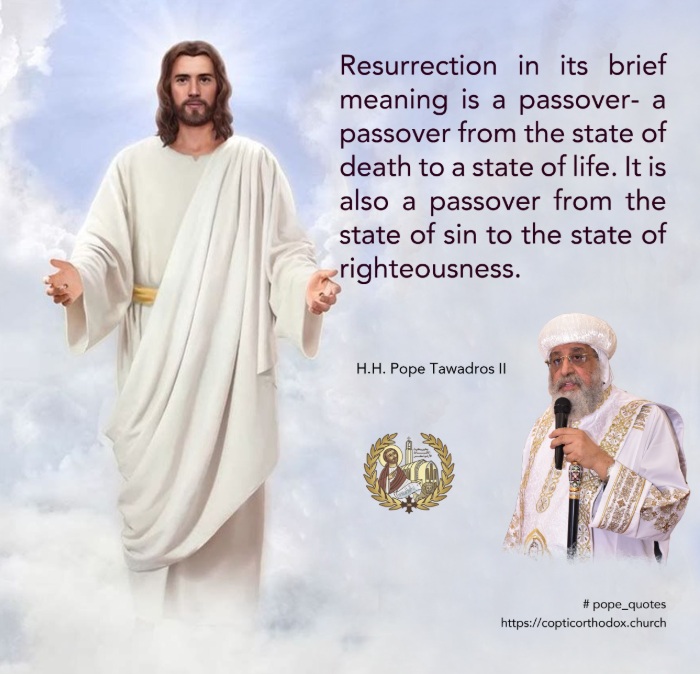
The period of the Fifty Holy Days is a special period in the ecclesiastical cycle. The prominent feature of this period is joy. The Church prays with a festal tune in all Her liturgies and prayers, including the funerals. During this period, the Church lives the life of happiness, which was experienced by the holy disciples after Christ’s resurrection and His appearance to them. The Divine inspiration describes this joy as such, “Then the disciples were glad when they saw the Lord.” (John 20:20) The Lord’s presence with the disciples led them to experience joy, which lasted with them for the rest of their lives. In the beginning, they saw the Lord with their eyes and touched Him, and they were happy. He continued to appear to them for forty days speaking to them about things pertaining to the Kingdom of God (Acts 1:3), until the time came for Him to leave them and ascend to heaven. However, after the forty days when Christ ceased to appear to them, the disciples’ happiness did not end.
In fact, this joy stayed with them because they continued to see Christ, but in a different way. At first, they saw Him with their physical eyes. Afterwards, they saw Him with the eyes of faith, which don’t need the physical evidence of His presence. Christ promised His disciples before His ascension that He will remain with them for all days; He said, “I am with you always even to the end of the age.” (Matt 28: 20) The disciples realized that His presence does not have to be a physical one similar to the times before the crucifixion and during the forty days. Therefore, they did not feel that Christ’s ascension meant an end to His presence with them and an end to their joy. On the contrary, their happiness continued after Christ’s ascension. Saint Luke mentioned in his gospel the following, “And He led them out as far as Bethany, and He lifted up His hands and blessed them. Now it came to pass, while He blessed them, that He was parted from them and carried up into heaven. And they worshipped Him, and returned to Jerusalem with great joy.” (Luke 24:50-52) Our Church teaches us how to be happy in the Lord.Since our true joy is in God’s presence with us, during the Fifty Holy Days we learn to be happy because of Christ’s presence amongst us, as well as our presence with Him.
Through Her liturgical services during the Fifty Days, our Church teaches us that happiness is in God’s presence. Consequently, we pray with the festal tune and praise God saying, “Christ is Risen” (Ikhristos Anecti). The Resurrection Procession during the Diving Liturgy allows us to feel the true happiness based on Christ’s presence in our midst. Even spiritual matters such as prostrations (metanoias) and fasting, which don’t agree with the festal rites, are halted during the Fifty Days since the friends of the bridegroom can not fast while the bridegroom is with them (Mark 2:19-20).
The Church’s readings during the Fifty Holy Days revolve around the theme of our Heavenly Bridegroom, Who is present in our midst. Thus the readings of the Sundays of the Fifty Days present to us different aspects of our Heavenly Bridegroom.
- The first Sunday, Thomas Sunday, affirms the resurrection of the Bridegroom, His victory over death by shattering the power of sin, and releasing the Church (the Bride) from bondage to sin. As the Bride, who is the Church or the human soul, gets acquainted with her Bridegroom, she sees in Him the following:
- He is the Bread of Life, Who nourishes us. The Heavenly Bridegroom said, “He who comes to Me shall never hunger, and he who believes in me shall never thirst.” (John 6:35) The Gospel reading of the second Sunday is from. (John 6:35-45).
- He is the giver of the living water and whoever drinks of Him will never thirst. During the Gospel reading of the third Sunday (John 4:1-42), Christ presents to us, along with the Samaritan Woman, the living water. He told her, “If you knew the gift of God, and who it is who says to you, ’Give Me to drink’, you would have asked Him, and He would have given you living water.” (John 4:10) When she inquired about the ability of Christ to give her living water, the Lord revealed to her the power of the living water in the person, who drinks of it, by saying, “Whoever drinks of this water will thirst again, but whoever drinks of the water that I shall give him will never thirst. But the water that I shall give him will become in him a fountain of water springing up into everlasting life.” (John 4:13-15)
- He is the Light of the world, Who lights our lives. In the Gospel reading of the fourth Sunday (John 12:35-50), our Heavenly Bridegroom says, “I have come as a light into the world, that whoever believes in Me should not abide in darkness.” (John 12:46)
- He is the way, the truth, and the life. Through Christ we see the truth and know the way to God and eternal life. In the Gospel of the fifth Sunday (John 14:1-11), our Heavenly Bridegroom says, “I am the way, the truth, and the life. No one comes to the Fr. except through Me.” (John 14:6)
- He is our peace and the source of our victory in conquering the world and its troubles. In the Gospel of the sixth Sunday (John 16:23-33), our Heavenly Bridegroom says, “These things I have spoken to you, that in Me you may have peace. In the world you will have tribulations, but be of good cheer, I have overcome the world.”
(John 16:33)
We must share our joy with others:
During the Fifty Holy Days, we become acquainted with our Heavenly Bridegroom and discover the power of His divinity, His abundant mercy, His promise to us for eternal life, and sitting with Him in the heavenly places. As we reflect on His loving actions towards us, we become happy, and no one can take away our joy.
This period teaches us that our joy in our Heavenly Bridegroom increases when we invite others to share with us this joy. Those who saw the Resurrected Christ, e.g. Saint Mary Magdalene, the Marys, the disciples at Emmaus, the disciples, and the others who witnessed the Resurrection all went and told others. After our Lord Jesus Christ revealed to His disciples the mysteries of the life of joy, He asked them to be His witnesses “in Jerusalem, and in all Judea, and Samaria, and to the end of the earth.” (Acts 1:8)
The everlasting joy in the Lord:
Our experience of joy due to God’s presence in our midst should not be limited to the Fifty Holy Days, but should extend to all the days of our life. The disciples were happy when they saw the Lord, but their joy continued after the Ascension, and they exhorted us to be happy in the Lord all the time. Saint Paul experienced the joy of being with the Lord and invited us to rejoice in the Lord always saying, “Rejoice in the Lord always. Again I will say, rejoice.” (Philp. 4:4)
Spiritual practices to express the joy of being in God’s presence:
We should train ourselves during the Fifty Holy Days to rejoice in the Lord. The following are some spiritual exercises to help us achieve that:
- When we partake of the Eucharist, we are receiving Christ within us. Thus Christ is with us and we are with Him. Our Lord said, “He who eats My flesh and drinks My blood abides in Me, and I in Him.” (John 6:56). Partaking the Body and Blood of Christ allows us to receive Christ inside us, thus leading us to rejoice in the Lord; no one can take away our happiness. Therefore, during communion, we praise the Lord by chanting. (Psalm 150:1-6). The Divine Liturgy is the celebration of our Lord’s death and resurrection. We meet the Lord like the disciples who met Him after the Resurrection, and we rejoice in Christ, Who is within us.
- One of the beautiful spiritual practices during the Fifty Holy Days is to partake of the Eucharist often, especially during the early morning Liturgies, the time of Christ’s resurrection. We will then experience the joy of those who witnessed the Resurrection of the Lord.
- Some pay a great deal of attention to partaking of the Eucharist during Lent, and then see the Fifty Holy Days as a time to lax spiritually. Therefore, they don’t pay much attention to attending the Divine Liturgy and receiving communion. However, this is a beautiful period to experience the joy of receiving the Lord in Holy Communion. Partaking of the Divine Mysteries transforms for us the joy, which the disciples experienced after Christ’s resurrection, from a historical event to an actual event, which we can experience along with them.
- When we are happy, it is appropriate to praise God by chanting. Saint James the Apostle said, “Is anyone cheerful? Let him sing psalms.” (James 5:13) We should take great interest in praising God and chanting during the Fifty Days by participating in the praises of the Church. Also, we should add to our personal prayers parts of the psalmody, e.g. the Doxology of the Resurrection, and memorize some of the hymns. This way we teach ourselves to express our joy in the Lord by praises and hymns.
- We rejoice in the Lord and our joy increases as we know Him more and experience Him with more depth. Therefore, one of the beneficial exercises during the Fifty Days is to concentrate our readings on the Person of Christ. We should read books, which address His divinity, His qualities, and His love for us. Thus we come out of this period with deeper knowledge about the Person of our Lord, God, and Savior Jesus Christ.
- Our joy in the Lord should not be limited to us only. One of the beneficial exercises also is to let others know about the Risen Christ, so they can share with us our joy in the Lord. We should practice bringing joy to others by searching for the souls troubled by sin, certain problems, or incurable diseases and wipe their tears. We bring joy to their hearts by helping them know the Lord, Who said, “Come to me all you who labor and are heavy laden, and I will give you rest.” (Matt. 11:28)
May the Lord help us, by His presence amongst us, to experience the life of joy and always live happily with our living Christ, Who loved us and gave Himself up for us.
— His Grace Bishop Serapion
Bishop of the Coptic Orthodox Diocese of Los Angeles, Southern California, and Hawaii