The Coptic Church, also known as the Egyptian Church, is the oldest Christian church in the world. Established by St. Mark the Evangelist in the first century of Christianity, it has a history spanning over twenty centuries. Interestingly, the Old Testament contains a prophecy about the Coptic Church. In the Book of Isaiah, Chapter 19, the prophet speaks of an altar being set up in the heart of Egypt. This begs the question: why did our Lord choose Egypt for this sacred purpose?
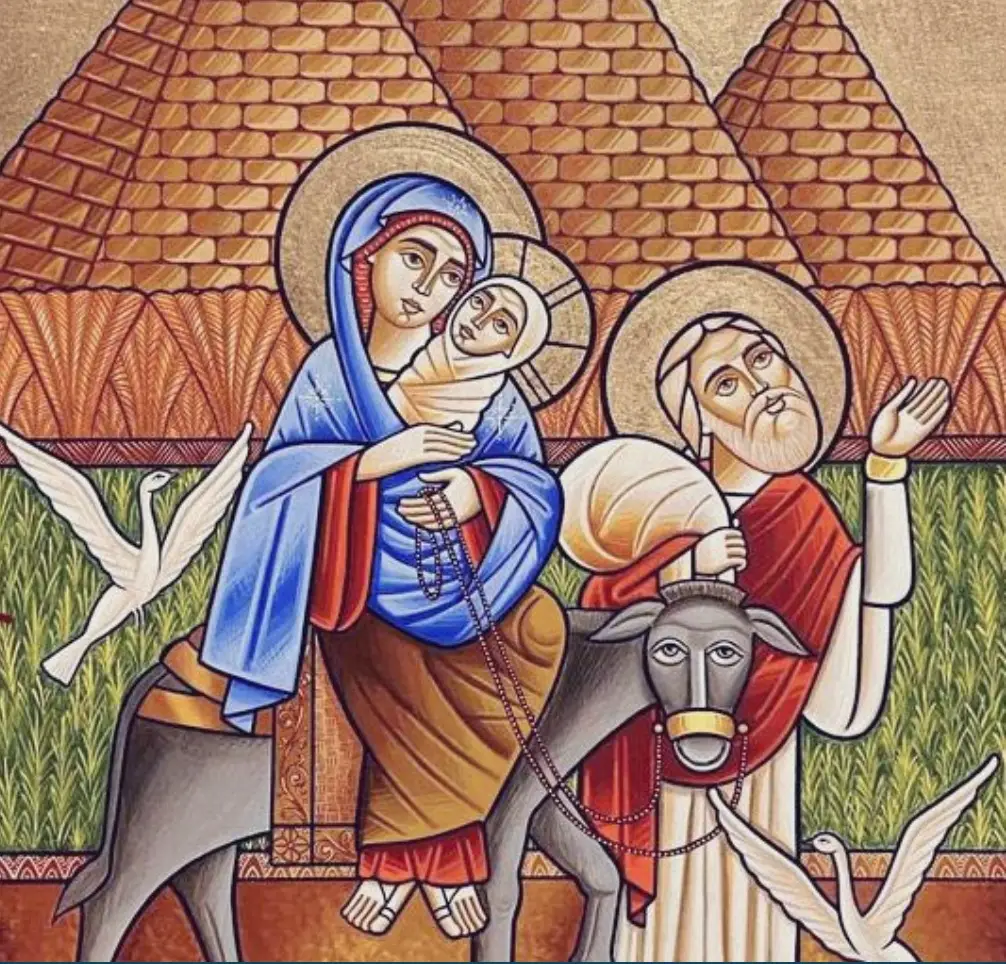
Egypt, a land of unparalleled civilization and rich history, has a legacy that predates Christ by more than 3,000 years. The Bible mentions several key figures who visited Egypt, enriching its cultural and intellectual landscape. Among them are Moses, the renowned prophet who possessed an in-depth understanding of Egyptian wisdom; Abraham, the revered father of all nations; Jacob, the patriarch of Israel; Joseph, Jacob’s son; and the twelve tribes of Israel. Notably, the visit of the Holy Family at the beginning of Christianity, during the childhood of our Lord, marked the crowning point of these sojourns.
The visit of our Lord to Egypt was a blessing for the land, and it was the only country outside His birthplace that He visited. Numerous miracles occurred during this sacred time, and many places were imbued with divine grace.
As a testament to this divine presence, numerous churches have been constructed in the locations where the Holy Family resided. These holy sites attract visitors from all corners of the globe, serving as sacred places of worship and pilgrimage.
Source: Posted by St. Mary Church, East Brunswick NJ
When St. Athanasius was a deacon, he led theological discussions at the First Ecumenical Council, Nicea I, in 325 A.D. He authored the Christian Creed and led the 318 Coptic bishops at the council. Four years later, he became the Pope of Alexandria, defending the divinity of Jesus Christ in his four-volume work, Contra Arianus. St. Jerome warned that the world would have fallen into Arianism if the work hadn’t been written. Exiled four times, Athanasius traveled to gain support from bishops and holy synods to maintain the faith. When he was exiled a fifth time, the Emperor could not carry out the order; thousands of church members protested, refusing to surrender their Pope.
Under the authority of the Eastern Roman Empire of Constantinople, the patriarchs and popes of Alexandria led Christian theology. Invited everywhere, they spoke about the faith. St. Cyril, Pope of Alexandria, presided over the Ecumenical Council in Ephesus in 430.
The Coptic Church of Alexandria’s greatest glory is its Cross. The Copts accept persecutions, hardships, and sufferings for Christ’s words, “If anyone desires to come after Me, let him deny himself, and take up his cross, and follow Me.” (Matthew 16:24) The Church carried the Cross throughout its history from St. Mark to every generation of Christianity. It has remained steadfast and unchanging in its faith.
As a result of this faith, countless martyrs have come from the Coptic Church. Among them are St. George, St. Mina, St. Moses the Strong, St. Abanoub, St. Anastasia, St. Catherine of Alexandria and thousands more.
Source: Posted by St. Mary Church, East Brunswick NJ
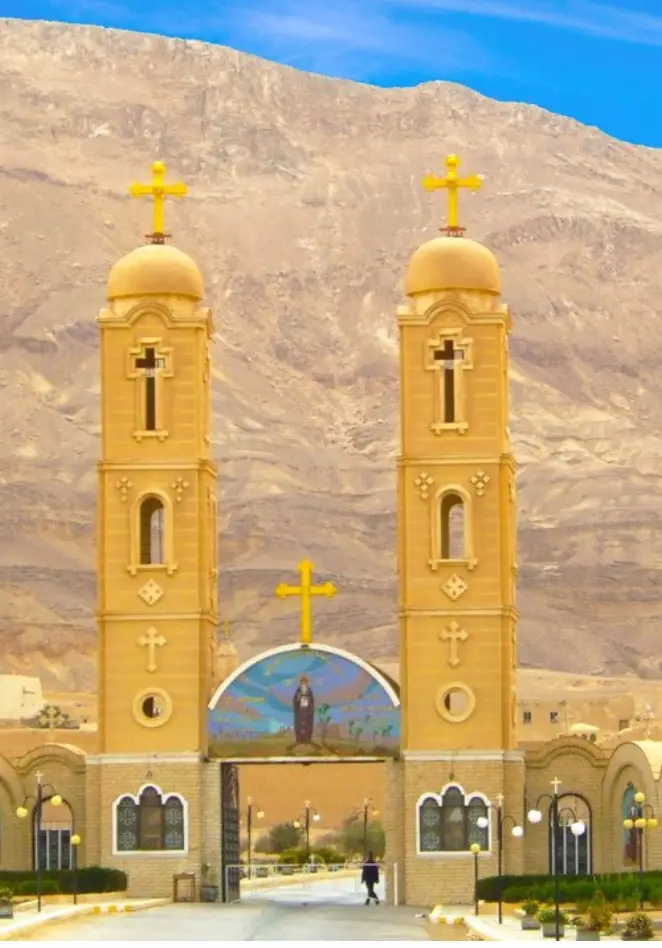
Egyptian monasticism involves prayer, contemplation, solitude, worship, and purity of heart. Monks live a calm and quiet life, detached from worldly concerns, all devoted to God.
The Church of Alexandria pioneered monasticism in the late 3rd and early 4th centuries. St. Anthony (251-356 AD), the world’s first monk, was a Copt from Upper Egypt. St. Bachomius (292-348), the founder of the cenobitical system, was also a Copt.
He was an Egyptian soldier who converted to Christianity after receiving compassionate treatment from Christians in Diospolis (modern-day Esna). He became a disciple of St. Palemon and established many monasteries with over 8000 disciples.
The development of monasticism occurred in the following stages:
- In the Apostolic age, many believers practiced asceticism, seeking the perfection of the Gospel without withdrawing from their families or communities.
- The church’s eschatological attitude reflected believers’ eager longing for their Bridegroom’s advent, leading them to live in virginity and devote themselves to worship as a spiritual preparation for the heavenly wedding feast.
- Some felt the need for a spiritual atmosphere and left cities to live in simple huts in villages, known as ‘devotees’ since the word ‘monk’ was unknown. They lived according to their orders.
- St. Anthony outlined the pattern of the anchoritic life.
Monasticism flourished in Egypt, with hundreds of monasteries and thousands of cells and caves scattered across the deserts.
St. Macanus of Egypt (300-390 AD) and St. Shenouti the Archmandrite (348-466 AD) were among its founders. They accompanied St. Cyril of Alexandria to the third Ecumenical Council of Ephesus. St. Pishoy, born in 320 AD, became a monk at twenty and departed in 417 AD. John Cassian, the founder of monastic life in France, reported hearing monks, hermits, and anchorites praying and singing hymns along the Alexandria-Luxorin route.
St. Paul, the Egyptian hermit, was the world’s first anchorite, living without seeing a human face for about eighty years.
Their spiritual life sought a true homeland in Heaven. We inherit this from our fathers: the first church in Alexandria inherited the glory of ancient Egypt, and we inherit the glory of our Church.
Source: Posted by St. Mary Church, East Brunswick NJ
The Coptic Church was misunderstood at the Council of Chalcedon in the 5th century. Accused of monophysitism, the Church believed in the unity of the Lord’s divine and human natures in one nature called “the nature of the incarnate word.” St. Cyril of Alexandria reiterated this belief. Faith was more important to the Copts than semantics, and St. Dioscorus of Alexandria was exiled due to political motives. Emperor Marcianus interfered with matters of faith in the church, revealing the Council’s true intentions. Dioscorus told the Emperor, “You have nothing to do with the Church.” In 451, the Coptic Church established independence but remained steadfast in its faith.
Egyptians were persecuted for believing in Christ’s two natures from 451 to 641, when Islam entered Egypt. Thousands were killed, and popes were exiled to strengthen the faith. When Islam arrived, the 38th Pope of Alexandria, Benjamin the First, had been in exile for 13 years. Many popes were forbidden from praying in churches and persecuted for being monophysites. Source: Coptic Orthodox Church
The Apostolic Age spans over a period of about 70 years, beginning with the birth of the Church on the Day of Pentecost with the descent of the Holy Spirit upon the Apostles, and ends with the departure of St. John the Apostle around 100 AD. The Apostolic Age witnessed the spread of Christianity throughout the world and the book of the Acts of the Apostles mentions many events of evangelism.
The Events of the Apostolic Age include:
- The Descent of the Holy Spirit on the Day of Pentecost, and
- Peter’s sermon with the first fruits of believers of 3,000 souls;
- The preaching of the Apostles in Jerusalem and
- The persecution of the Jews against Christians;
- The opposition of the Jewish Chief Priests and Sadducees to the Apostles Peter and John… and
- The word of the Lord grew and prevailed and the number of those who believed came to be about 5,000;
- The Election of the Seven Deacons, with Stephen the First Deacon and First Martyr;
- The waves of persecution and the scattering of Christians who went everywhere, preaching the word and bringing Christianity to the surrounding countries;
- The preaching of Philip in Samaria;
- The Appearance of the Lord to Saul of Tarsus, and his subsequent conversion to Christianity and given the name Paul the Apostle;
- Peter’s Sermon in the house of Cornelius; the Council of Jerusalem;
- The first of the Twelve to be martyred with the martyrdom of James the Just, Bishop of Jerusalem; the imprisonment of Peter;
- The preaching in Phoenicia, Antioch and Cyprus, and in the coastal cities on the Mediterranean Coast;
- The preaching throughout Palestine in Judea, Galilee and Samaria;
- The Missionary Journeys of St. Paul the Apostle and the work of his fellow companions the Apostles, and others.
Source: Coptic Orthodox Church
WHO ARE THE COPTS? The Coptic Orthodox Church is one of the most ancient churches in the world, founded in Egypt in the first century by Saint Mark the Apostle and writer of the second Gospel of the New Testament. A conservative church, it has carefully preserved the Orthodox Christian faith in its earliest form. It is a faith that has been passed down through generations,always remaining true to the apostolic doctrines and patterns of worship. The church’s spiritual approach emphasizes holiness, divine mysteries, and fellowship, rooted firmly in the canons of the holy scriptures, the apostolic and orthodox creeds, the teachings of the church fathers, and the first three ecumenical councils.
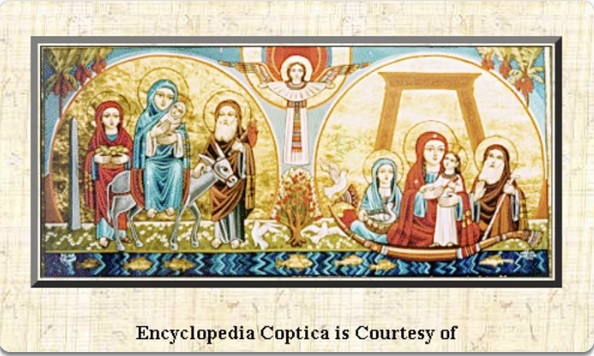
ORIGINS Egypt is a land rich in history, blessed by our Lord Jesus Christ himself. In His infancy,during their flight from Israel at the instruction of the angel, the Lord visited Egypt with His mother Saint Mary, and Saint Joseph Naturally, Egypt became their second home and a place of refuge (Matthew 2:13-14). The word ‘Copt’ is derived from the Pharaonic word ‘gypt’ and the subsequent Greek word ‘Aigyptus’ meaning ‘Egypt’. Copts are the Christian and indigenous peoples of Egypt, direct descendants of the ancient Egyptians, a people with perhaps the longest history on record.
When Saint Mark traveled to Egypt on two separate occasions, he preached the Christian message to many in the land. During his first journey, he met with Ananias, who expressed knowledge of the concept of ‘one god’, and when this was further explained by Saint Mark within a Christian context, he accepted the faith and was baptized along with his household. Soon after, many others pronounced their newfound belief, and Ananias’ house became a meeting place for the faithful. After witnessing for seven years, Saint Mark was martyred in AD 68 when followers of Serapis (the Serapion-Abbis Greek Egyptian god) attacked the church in which he prayed and dragged him through the streets of Alexandria for two consecutive days.
SACRAMENTS Like any other traditional sacramental church, the Sacraments are considered to be sacred actions. Believers receive an invisible grace, through material or visible signs and elements. The Coptic Church observes seven Sacraments:
- Baptism
- Chrismation
- Repentance and Confession
- The Eucharist
- Unction of the Sick
- Matrimony
- Priesthood/Holy Orders
In Eucharistic liturgy, the faithful gather in union to pray, and to partake of the Eucharist, believed to be the body and blood of the Lord Jesus Christ. The liturgy is chanted in the Coptic language, alongside the language of the land in which the church is based. A musical composition dating back to the Pharaonic Erais used. The three divine liturgies celebrated in the church today are those of Saint Basil, Saint Gregory, and Saint Cyril, all based on what Saint Mark used in the first century.
LEADERSHIP Parish communities and churches are served by married priests who are nominated from within the parish. Once nominated, their names are presented to the bishop who then approves and ordains them for the ministry. Bishops on the other hand, including the Pope, are celibate and are selected from within Monastic communities.
Monasticism was founded by Saint Anthony the Great towards the end of the third century and thrives in the Church to this day. Those living the Monastic life within any church or denomination in the world can trace their roots back to the deserts of Egypt. Although monks did not record their history, many people traveled from around the world to benefit from their words, seeking spiritual guidance and documenting their teachings. The Western monastic fathers, including Saint Benedict and Saint John Cassian, came to the deserts of Egypt to lead a solitary life. They introduced the way of the monks to the West, where the way of life was then embraced and became the foundation of Monasticism in these parts of the world. Those living the Monastic life became tangible sermons, faithfully embodying the life of prayer, contemplation, solitude, worship, purity of heart, and asceticism.
FASTING Stemming from these Monastic principles is a deeply rooted Ascetic life that is expressed through the practice of fasting( another principle in the life of the church of the 365 days of the year, Copts fast for over 210). These periods of fasting are considered times of spiritual growth and reflection based on prayer and scripture, during which people abstain from food at the beginning of the day and follow a vegan diet. The major fasting periods in the Coptic calendar are Lent, leading to the Feast of the Resurrection, and Advent, leading to the Feast of the Nativity.
PRAYER Prayer is a fundamental part of life of in the church and the Agpeya is the name of the book containing the seven prayers rehearsed daily. Arranged to commemorate various events in the life of Christ and the church, they help to guide the faithful in daily reflection, and are labelled as the first, third,sixth, ninth, eleventh, twelfth and midnight hour. The veil is a separate daily prayer only observed by those practicing a Monastic life. Other forms of prayer include the Raising of Evening and Morning Incense, Midnight Praises, and Morning and Evening Praises. Within the context of non-ritual gatherings and prayer meetings, contemporary forms of prayer and worship are also used.
Seeking the intercession of saints is a valued component in Orthodox practice, although it is sometimes misunderstood as the worship of those saints. The understanding behind intercession is that strength and encouragement can be found in commemorating the life of those who lived faithfully, including the martyrs who died for their faith, and that there is value in asking for their prayers.
'CHURCH OF THE MARTYRS' Historians have named the Coptic Church the ‘Church of Martyrs’, because of the many people who died for their faith. During the reign of Emperor Diocletian almost one million men, women, and children were killed as a result of their faith in Egypt.To commemorate their sacrifice, the church was determined to commence its calendar, known as ‘Anno Martyrii’, or ‘Year Of the Martyrs,’ in the year 248 AD, which is the year Emperor Diocletian began his reign.
Another wave of persecution arrived when Islam entered Egypt in the seventh century,unveiling a fresh set of challenges for Christians and the church.A new requirement was made for the payment of Gezya tax by non-Muslims in exchange for the receipt of ‘protection’. Those who could not pay were forced to choose whether they wished to convert to Islam or lose their civil right for that protection, which resulted in a countless number of deaths. By the beginning of the second millennium AD, in addition to Gezya, Christians suffered from specific limitations, such as restrictions against the repair of old churches and the building of new ones, testifying in court, public conduct, adoption, inheritance, public religious activities, and dress codes. Slowly but steadily, by the end of the 12th century, the face of Egypt changed from predominantly Christian to predominantly Muslim.
Despite persecution,the Coptic Church has never been controlled, nor has it allowed itself to control the governments of Egypt.The position of the church regarding the separation between state and religion stems from the words of the Lord Himself, “Render therefore to Caesar the things that are Caesar’s, and to God the things that are God’s ” (Matthew 22:21).
GROWTH Today, the Coptic Orthodox Church has the largest Christian presence in the Middle East, with approximately 10-15 million members in Egypt, representing about 15 percent of the population. They vibrantly, actively and faithfully fill their churches and monasteries, living as productive and faithful members of their communities. The Coptic Orthodox Church has also experienced rapid growth in the lands of immigration over the past 30 years, in the United Kingdom, Europe, North America, and Australia. There are now over 15 dioceses and 500 parishes outside Egypt, and the Church continues to flourish by the grace of God. It is important to make mention of the fact that we do not consider our communities living abroad as a diaspora, since 90 percent of Coptic Christians still live in their native Egypt.
MINISTRY This flourishing ministry is the direct result of the church’s focus on Christian education at every level over the last few decades. These efforts include, a vibrant and wide-ranging Sunday school movement, an active and engaging youth ministry, and adult education within theological colleges, ,seminaries, and local parish settings.
In addition to its focus on Christian education,the church also has a deep-seated and historical focus on mission. The mission work of the church is not limited to early centuries, but extends to active and vibrant ministries today. Our philosophy is not to aggressively seek to convert people to the Faith, but rather to follow the teachings of the Lord Jesus Christ in the Gospel of Saint Matthew, when He instructs us by saying “Let your light so shine before men, that they may see your good works and glorify your Father in heaven”. We believe that by following the Lord , we will attract others to Him . The principal function of the church is to care for its flock and to be “a light to the whole world”, attracting people to Christ. We are alive in the world as the body of christ and the church provides a source of hope for all. Source: St. Mina & Pope Kyrillos Monastery, Canada