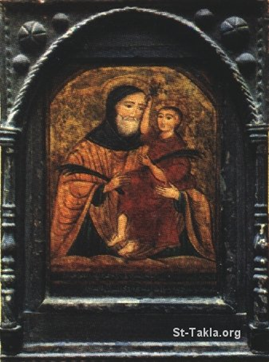
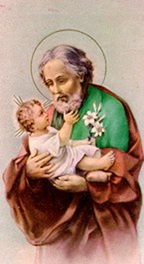
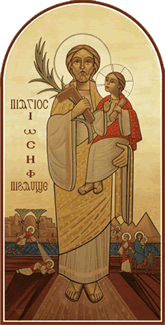
Born in Bethlehem of Judea,
St. Joseph came from the
Royal lineage of King David.

Both St. Luke & St. Matthew
mark his descent from David
The Greatest King of Israel

(Matthew 1:1-16 & Luke 3:23-38).
Very little is mentioned in the Bible about the life of St. Joseph the Carpenter; however, by examining the traditions of the time period in which he lived and references from our early church fathers, we can get a more detailed history of the patron saint of our church.

In the Gospel according to St. Matthew Chapter 1, the descendants of our Lord Jesus Christ are traced starting with Abraham. It is important to note that this genealogy traces Jesus’ ancestry from St. Joseph and not from St. Mary even though St. Joseph was not Jesus’ biological father. Under Jewish law, a child’s ancestry is traced from the father’s side.

St. Mary knew this very well and that is why when she and St. Joseph were looking for Jesus in the temple, she told Him,

“Behold your father and l have been looking for you anxiously.” Luke 2:48.

The MIRACULOUS STAIRWAY of St. Joseph
| Staircase of Santa Fe New Mexico | Saint Joseph the Worker


✞ Our Patron Saint
✞ Our Patron Saint
St. Joseph’s Life before St. Mary

  • Very little is mentioned in the Bible about the life of St. Joseph the Carpenter; however, by examining the traditions of the time period in which he lived and references from our early church fathers, we can get a more detailed history of the patron saint of our church.

  • In the Gospel according to St. Matthew Chapter 1, the descendants of our Lord Jesus Christ are traced starting with Abraham. It is important to note that this genealogy traces Jesus’ ancestry from St. Joseph and not from St. Mary even though St. Joseph was not Jesus’ biological father.

  • Under Jewish law, a child’s ancestry is traced from the father’s side.

  • St. Mary knew this very well and that is why when she and St. Joseph were looking for Jesus in the temple, she told Him, “Behold your father and l have been looking for you anxiously.” Luke 2:48.

St. Joseph’s Fathers

  • Two Gospels help reveal the identity of St. Joseph’s father.

  • First, the Gospel according to St. Luke mentions that his father was a man named Heli (Luke3:23)

  • while the Gospel according to St. Matthew states that the man who begot St. Joseph was Jacob (Matthew 1:15-16).

  • To reconcile this seemingly contradictory relationship, it is important to understand the nature of marriage in this time period.

  • At that time, when a man died childless, it was the duty of his brother to marry the widow in order to beget children for his deceased brother.

  • When Heli died, he was childless; and therefore, Jacob, Heli’s brother, married Heli’s widow and begot a son that is, St. Joseph the Carpenter.

  • To this extent then, we can say that St. Joseph had two fathers: his biological father Jacob, and, his legal father Heli.

  • St. Matthew was addressing his Gospel to the Jews. For that reason, it was important that he would prove to them that our Lord Jesus and His father St. Joseph were in fact descendants of Abraham.

  • By tracing Jesus’ ancestry starting from Abraham, St. Matthew was able to prove that the Messiah came from a sinful generation in order to carry the sins of the world.

  • St. Luke, on the other hand, mentions the ancestry of our Lord Jesus starting with St. Joseph and tracing it back to Adam. By doing this, he reveals to us the gift of God that raises us to our original status which is “….the son of Adam, son of God” (Luke 3:3 8).

St. Joseph’s first marriage

  • Contradicting information is found regarding St. Joseph’s early life.

  • Some sources indicates that he was a virgin, while other says that he was married for 52 years to woman whose name is unknown.

  • It is also suggested that James, Joses, Simon and Judas, who are said to be the Lord’s brothers in Matthew 13:55, were in fact Joseph’s own children from his first marriage.

  • It was also said that St. Joseph lived as a widower for 19 years before he became betrothed to St. Mary.

The Chosen One
The Chosen One

Why was he chosen?
  • To be chosen by God to be the earthly father to His Son is a great honour and one that must be well deserved.

  • What characteristics then did St. Joseph have that made him worthy to become the father of our Lord Jesus Christ?

  • First, the Bible tells us that St. Joseph was a righteous man (Matthew 1:19) and a man of great faith.

  • He was also a man who took his responsibilities seriously and was trust-worthy and noble.

  • He was chosen to take care of the Virgin Mary and her Son, Jesus Christ. God knew that St. Joseph would be able to carry on this important task.

  • God chose St. Joseph for St. Mary because He could trust him and also because St. Mary was in need of a guardian.

  • St. Mary was a Nazirite because her parents had promised the Lord that they would offer her to serve in the temple.

  • At the age of twelve, she was no longer allowed to live in the temple.

  • One may wonder how St. Mary’s deep-rooted desire to serve God could be reconciled with a marriage.

  • The answer can only be found in the Annunciation. St. Mary understood that she was to fulfill her virginal desire to give herself exclusively to God precisely by becoming the Mother of God.

  • That’s why St. Mary said to the angel Gabriel, “How shall this be, seeing I know not a man?” Luke 1:34.

St. Joseph’s Trust in the Angel’s Message

The story of the Nativity started when St. Mary became pregnant in virginity. When St. Joseph noticed her pregnancy, he became confused and doubted her virginity. This presented a serious problem because it was against the Jewish law to keep an adulterer in the house. St. Joseph knew that if he turned St. Mary away, she would be stoned to death. Being a kind and compassionate man, St. Joseph was not prepared to make a public example of St. Mary, so he planned to put her away to ensure her safety. “…was minded to put her away secretly.” (Matthew 1:19)

While St. Joseph was in deep thought regarding St. Mary’s fate, an angel of the Lord appeared to him in a dream saying, “Joseph, son of David, do not be afraid to take to you Mary your wife, for that which is conceived in her is of the Holy Spirit. And she will bring forth a Son, and you shall call His name Jesus; for He will save His people from their sins.” (Matthew 1:20-21) After receiving this message, St. Joseph, not doubting the angel’s words or the purity of-the Virgin, did not argue, or complain. He silently accepted his task from the Lord and was determined to follow it.

As a godly man, St. Joseph knew that nothing is impossible to God. He did not doubt the angel’s message and knew without any doubt that St. Mary would deliver Jesus the Son of God.

We also note that St. Joseph’s faith was stronger than that of Simeon. When Simeon was translating the Old Testament, he came to Isaiah 7:14, which states, “Therefore the Lord Himself will give you a sign: Behold, the virgin shall conceive, and bear a son, and shall call His name Immanuel.” Simeon upon reading these words wanted to change the word “virgin” to “girl”. This was because he could not accept that a virgin could bear a child.

Then God told him that he will not see death until he sees the Saviour born from a virgin. From this we can see that St. Joseph’s faith was stronger than Simeon and that is why when Jesus’ parents took Him to the temple, “Simeon took him up in his arms and blessed God and said: Lord, now You are letting Your servant depart in peace, according to Your word” (Luke 2:28-29)

The Birth of Jesus: “And it came to pass in those days that a decree went out from Caesar Augustus that all the world should be registered. This census first took place while Quirinius was governing Syria. So all went to be registered everyone to his own city. Joseph also went up from Galilee, out of the City of Nazareth, into Judea, to the city of David, which is called Bethlehem, because he was of the house and lineage of David, to be registered with Mary, his betrothed wife, who was with child. So it was that while they were there, the days were completed for her to be delivered. “(Luke 2:1-6). During this trip, St. Joseph had the challenge of finding a place suitable for the birth of Christ. He was worried for St. Mary’s time had come, and yet he searched in vain for an inn in which St. Mary could give birth. The best that St. Joseph could find was a stable. This stable had been part of God’s plan. St. Joseph, unlike any other Biblical figure, was a witness to the birth of Christ the Saviour. He was there and saw the miracle of this birth right before his eyes. He also witnessed the adoration of the shepherds who arrived at Jesus’ birthplace after the angel had brought them the great news (Luke 2:15-16), as well as the homage of the wise men, who came from the East. (Matthew 2:11)

It is important to note that God gave St. Joseph the privilege of not only witnessing His birth but also the honour of carrying Him in his arms. St. Joseph was indeed greatly blessed.

As we mentioned earlier, on the eighth day of the birth of Jesus Christ, St. Joseph and St. Mary took Jesus to the temple according to Moses’ commandment. In the temple, Simeon carried Jesus in his arms. As God had promised, Simeon would not see death before he sees the Saviour born from the Virgin. At the temple, we see St. Joseph taking great caution to fulfill all the Jewish laws. Being a man of meagre means, St. Joseph could not afford to make elaborate offerings, so he presented two doves, which is considered to be the minimum offering.

St. Mary the Ever Virgin: St. Mary the “Ever Virgin” through the power of the Holy Spirit gave birth to Jesus Christ our Saviour. She remained a Virgin until her death; she had no children from St. Joseph. Some people doubt the truth of this statement. They argue that St. Mary must have had more children after Christ because the Bible refers to the “brothers of Jesus”. As stated earlier, however, this reference may be to St. Joseph’s children from his first marriage, or it could refer to Jesus’ cousins, who would have been referred to as brothers in this historical time period.

The Flight to Egypt
The Flight to Egypt

When we trace the events that included St. Joseph the Carpenter, we see that his dedication, obedience and silence helped fulfill God’s plan. First we note that St. Joseph did not argue with the angel who told him that St. Mary had conceived a child through the Holy Spirit.

St. Joseph quietly and obediently accepted the message and did as he was directed. Then we find St. Joseph in his old age traveling with his pregnant betrothed wife and having to face the difficulties of finding a place for her to give birth to the King of kings. St. Joseph never questioned his circumstances. He quietly and serenely sought out a place for Christ to be born.

Why did they flee?:

After the birth of Christ, St. Joseph faced another challenge. King Herod heard from the wise men that a new king was born in Bethlehem. King Herod became worried that the people would follow this new king. As a result, he asked the wise men, who were on their way to find Jesus, to inform him of this new king’s whereabouts so that he too could go and worship. That, however, was not Herod’s intent. Driven by jealousy, Herod wanted to murder the Child. The wise men, after seeing Jesus, received a message from God directing them to take another route home and not return to Herod the king. When the king did not hear from the wise men, he became furious and ordered that every child in Bethlehem under the age of 2 be killed. After this decree, an angel appeared once more to St. Joseph in a dream and told him, “Arise, and take the young Child and His mother, flee to Egypt, and stay there until I bring you word…” (Matthew 2:13).

Put yourself in St. Joseph’s position. Would you have believed in a Saviour that needed to flee – a Saviour who could not protect Himself? While many may have doubted the dream, St. Joseph, humble in mind and spirit, got up and took the Holy Family to Egypt. This trip was long and difficult. St. Joseph placed St. Mary and Christ on the back of a donkey, and he walked beside them for a total of approximately 1,000 km. As a result of his obedience, the land of Egypt experienced the blessing of the Holy Family which was spared from the wrath of King Herod.

Holy Family in Egypt:

According to our Coptic tradition, the Holy Family lived in Egypt for three years and eleven months, moving from one place to the other. During this time St. Joseph had to find means to provide for his family in the land of Egypt. Surely, St. Joseph was filled with the Grace of God to have been able to overcome the obstacle of dwelling in a foreign land in his old age. Being an old man must have presented certain difficulties. Imagine an old man having to make a long journey on foot similar to the one St. Joseph made to Egypt. Imagine an old man making this journey in the desert of Egypt, dealing with the scourging hot sun during the day and the bitter cold during the night. Imagine an old man responsible for a wife and a Child, having to deal with the wild animals and thieves in the heart of the desert. Imagine an old man enduring these challenges with only his faith to give him strength and the will to continue the journey.

During their travel, it is noted that the Holy Family faced difficulties in finding a place to stay and rest because whenever they passed by any pagan temple, the idols would shake and fall in front of our Lord. This resulted in their being treated badly and often they were asked to leave the villages and towns. Having to move from one place to another made the journey so much more difficult for the Holy Family.

In Egypt, St. Joseph must have witnessed our Lord perform many miracles even before He started His three year service.

The Holy Family in Nazareth

The summons to return to Palestine came only a few years after the Holy Family arrived in Egypt. The Holy Family returned to Israel and settled in Nazareth. St. Joseph, henceforth, lived the simple life of a humble Jew, supporting himself and his family from his carpentry or some other sort of craftsman.

Jesus at the age of 12:

We know for a fact that St. Joseph loved Jesus. His one concern was for the safety of the Child who had been entrusted to him. When our Lord Jesus was 12 years old, the Holy Family took part in the feast in Jerusalem, as they were used to do every year. St. Luke mentions this event in chapter 2, and tells us what happened on that day, “When they had finished the days, as they returned, the Boy Jesus lingered behind in Jerusalem. And Joseph and His mother did not know it” Luke 2:41. After a day’s journey, St. Mary and St. Joseph noticed Jesus’ absence and returned to Jerusalem in search for him. This took three days. They eventually found Him sitting in the midst of the teachers in the temple, both hearing them, and asking them questions. All that saw Him and heard Him were astonished at his understanding and answers. St. Mary asked, “Son, why have you done this to us? Look, Your father and I have sought You anxiously.” (Luke 2:48).

Some people may feel that St. Mary and St. Joseph were not very attentive to our Lord Jesus because it took them three days to notice His absence, but there is a logical explanation for this. In Biblical times, when a large family started a long journey, (from Jerusalem to Nazareth) the women and children left a day earlier because they walked slower than men. Therefore, when St. Mary started the journey, she thought that our Lord Jesus, who was 12 years old at that time, was with St. Joseph. Conversely, St. Joseph thought that Jesus would have left earlier with St. Mary. The absence of our Lord was not noticed until St. Joseph and St. Mary met up later.

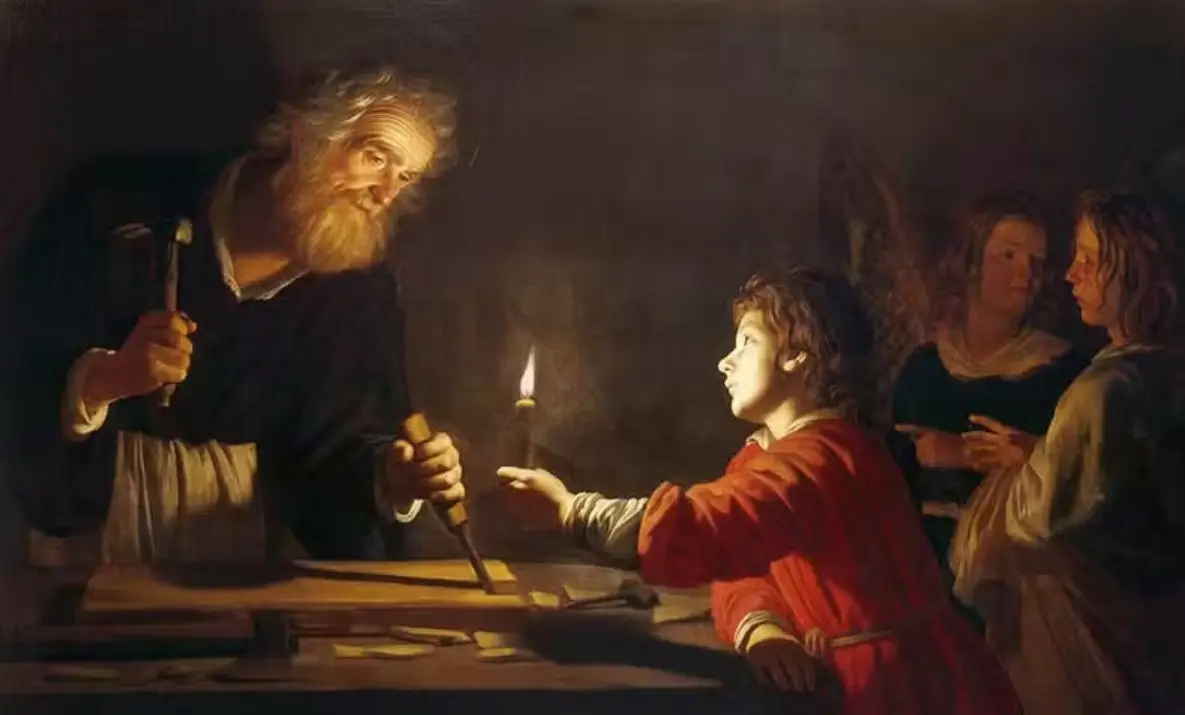
We also know that St. Joseph treated our Lord Jesus as his own son because in Nazareth, Jesus was always known as the Son of Joseph or the Son of the Carpenter. Thus in Luke 4:22, it states, “Is this not Joseph son?” We also know that St. Joseph taught Jesus the carpentry, which indicates that they spent a lot of time together. Also in the Gospel according to St. Mark it was said that Jesus Himself was a carpenter “Is not this the carpenter… “Mark 6:3.

St. Joseph was truly glorified for in the Holy Bible according to St. Luke 2:50 it was mentioned that our Lord Jesus Christ was obedient to St. Joseph, yet our Lord is the one whom all creation should obey. By giving His obedience to St. Joseph, God rewarded him for his faithful service and unquestionable dedication and love.

The Departure of St. Joseph

On the 26th of Abib, which is equivalent to August 2nd, our church celebrates Saint Joseph’s departure. According to tradition, St. Joseph was 111 years old when he departed from this word. He was buried in his father Jacob’s tomb.

When St. Joseph died, our Lord Jesus was 16 years of age. We can conclude that St. Joseph died before our Lord Jesus started His three years of service because all four Gospels mention the presence of our Lord Jesus’ mother and brothers but not St. Joseph. Also, on the cross our Saviour gave St. John, His beloved disciple, the responsibility of caring for St. Mary.

Our Saviour, being present at the side of His father, knew beforehand that St. Joseph’s hour had come. Our Lord Jesus laid His hands on St. Joseph’s eyes as he delivered his soul to God.

At the time of St. Joseph’s departure, St. Mary, the Mother of God and Our Lord and Saviour Jesus Christ surrounded him. St. Joseph’s departure from this world must have been peaceful. St. Joseph witnessed the miracle of the birth of Christ. He witnessed the power of God and was instrumental in fulfilling God’s plans. His silent obedience and gentle nature was rewarded when the angels carried his soul to rest in the bosom of Abraham, Isaac and Jacob.

Lessons to Learn from St. Joseph

Our Coptic Church always encourages us to learn from the lives of the saints and to follow in their footsteps. Even though little is really known about St. Joseph, his spirituality is a guiding light for everyone who reflects on the privilege that St. Joseph received in being Jesus’ earthly father.

From St. Joseph, we learn to be compassionate and not judgmental; we learn to be obedient and to trust in the Lord always.

St. Joseph the Compassionate

St. Joseph was a compassionate man. When he discovered that St. Mary was pregnant and he knew that the child was not his own, he refrained from judging her. Even though he was unaware that she was carrying the Son of God, he did not want to subject her to public humiliation and possible death. He didn’t rush to any conclusions, nor did he do anything to harm the Child in her womb. In spite of the difficulty of this situation and its social stigma, St. Joseph responded with a quiet resolve to protect St. Mary from any harm.

It is great to follow St. Joseph’s example because he teaches us not to judge others. He teaches us to be patient until we are certain of the facts. He teaches us to treat people with compassion even when the situation looks very bad. God did not leave St. Joseph waiting in his doubt for a long time. Because St. Joseph was patient and caring, God rewarded him with the truth quickly and He did so by sending an angel to shed light.

St. Joseph the Obedient

Throughout St. Joseph’s life, he never failed to be obedient. He obeyed even when the challenges were very difficult. He obeyed without question. He followed the Lord’s every commandment as well as the Jewish laws of that time. When God gave St. Joseph St. Mary to care for, he obeyed. When he ordered St. Joseph to go to Egypt, he obeyed. When he ordered him to leave Egypt, he obeyed.

No matter how difficult the situation is, St. Joseph always quietly obeyed. We also need to obey not only God’s commandments but also our spiritual fathers but also our parents, for they have been entrusted with caring for us. We learn from St. Joseph that obedience is a virtue that is greatly rewarded by God.

St. Joseph and Trust

St. Joseph set off on a long journey into the desert of Egypt not knowing when he and his family would return to their homeland. He didn’t know where they would sleep or how they would survive; yet he placed all his trust in God. He left the future in God’s hands. He did not question God’s motives and he did not worry.

It is in our nature to worry, especially when we are facing hard times and difficulties. We often doubt that the Lord will help us and guide us through our struggles. St. Joseph kept his trust in God and was rewarded with a life filled with privilege and peace. We too must learn to trust in God and never allow our trust to waver.

St. Joseph in the Bible

St. Joseph is not often mentioned in the Bible, and this is not because he is less of a saint, but only for the simple reason that all four gospels mainly focus their writings on the last three years of the Lord’s life. St. Joseph was not present at that time when our Saviour started His service, for it is suggested that St. Joseph had departed when our Lord was sixteen years of age. Yet, St. Joseph is mentioned in all four Gospels sixteen times. The verses are as follows: Matthew 1:16 Matthew 1:18 Matthew 1:19 Matthew 1:20 Matthew 1:24 Matthew 2:13 Matthew 2:19 Luke 1:27 Luke 2:4 Luke 2:16 Luke 2:33 Luke 2:43 Luke 3:23 Luke4:22 John 1:45 Luke 6:42

  • Matthew 1:16 – And Jacob begot Joseph the husband of Mary, of whom was born Jesus who is called Christ.

  • Matthew 1:18- Now the birth of Jesus Christ was as follows: After His mother Mary was betrothed to Joseph, before they came together, she was found with child of the Holy Spirit.

  • Matthew 1:19- Then Joseph her husband, being a just man, and not wanting to make her a public example, was minded to put her away secretly.

  • Matthew 1:20- But while he thought about these things behold, an angel of the Lord appeared to him in a dream, saying, “Joseph, son of David, do not be afraid to take to you Mary your wife, for that which is conceived in her is of the Holy Spirit.

  • Matthew 1:24- Then Joseph, being aroused from sleep, did as then angel of the Lord commanded him and took to him and his wife.

  • Matthew 2:13- Now when they had departed, behold, an angel of the Lord appeared to him Joseph and in a dream saying, “Arise, take the young Child and His mother, flee to Egypt, and stay there until I bring you word; for Herod will seek the young Child to destroy Him.”

  • Matthew 2:19- Now when Herod was dead, behold, an angel of the Lord appeared in a dream to Joseph in Egypt,

  • Luke 1:27- to a virgin betrothed to a man whose name was Joseph, of the house of David. The virgin’s name was Mary.

  • Luke 2:4- Joseph also went up from Galilee, out of the city of Nazareth, into Judea, to the city of David, which is called Bethlehem, because he was of the house and lineage of David,

  • Luke 2:16- And they came with haste and found Mary and Joseph, and the Babe lying in a manger.

  • Luke 2:33- And Joseph and His mother marvelled at those things which were spoken to Him.

  • Luke 2:43- When they had finished the days, as they returned, the Boy Jesus lingered behind in Jerusalem. And Joseph and His mother did not know of it;

  • Luke 3:23- Now Jesus Himself began his ministry at about thirty years of age, being (as was supposed) the son of Joseph, the son of Heli,

  • Luke 4:22- So all bore witness to Him, and marvelled at the gracious words which proceeded out of His mouth. And they said, “Is this not Joseph’s son?”

  • John 1:45- Philip found Nathaniel and said to him, “We have found Him of whom Moses in the law, and also the prophets; wrote-Jesus of Nazareth, the son of Joseph.”

  • John 6:42- And they said, “Is not this Jesus, the son of Joseph, whose father and mother we know? How is it then that He says, “I have come down from heaven’?”

St. Joseph the Carpenter (Fiancé of Virgin Mary)

During the holy days of the Nativity Fast, as we prepare ourselves to receive the Word Incarnate, we tend to focus on the Baby Jesus and His blessed mother Virgin Mary. We sing praises to our Lord Jesus Christ and we venerate St. Mary as we chant the Kioahk Praises.

In the churches, replicas of mangers are up and the icons of the Nativity and the Holy Family take center places. In all this festivity, we tend to overlook the role of a very important member of the Holy Family during these events, St. Joseph the carpenter.

Born in Bethlehem of Judea, St. Joseph came from the royal lineage of King David. Both St. Luke and St. Matthew mark his descent from David, the greatest king of Israel (Matthew 1:1-16 and Luke 3:23-38). The Scriptures do not tell us why or when originally St. Joseph left Bethlehem and chose Nazareth to be his place of residence, but it tells us that he was a carpenter (Matthew 13:55).

According to tradition, when St. Mary, who was dedicated to the temple, completed twelve years in the sanctuary and could not stay there any longer, the priests announced through Judea that they wished to find in the tribe of Judah a respectable man, to espouse her. St. Joseph was among the candidates. A miracle revealed the choice of St. Joseph God had made. When the priests gathered twelve righteous men from the tribe of Judah and took their staffs inside the sanctuary, a dove flew up and stood on the staff belonging to St. Joseph. They immediately knew that this was God’s will. The righteous St. Joseph took St. Mary to his house. Both spouses intended for this betrothal to be virginal marriage.

When St. Joseph discovered St. Mary was pregnant, he knew the child was not his. St. Joseph knew that a woman accused of adultery could be stoned to death. Being a compassionate man, full of love he did not want to defame her for "Love covers all sins" (Proverbs 10:12). Being sensible and discreet he did not show annoyance nor behaved in anger but behaved with prudence "A fool’s wrath is known at once, But a prudent man covers shame" (Proverbs 12:16) and decided to put her away secretly (Matthew 1:18,19).

"But while he thought about these things, behold, an angel of the Lord appeared to him in a dream, saying, "Joseph, son of David, do not be afraid to take to you Mary your wife, for that which is conceived in her is of the Holy Spirit..." Then Joseph, being aroused from sleep, did as the angel of the Lord commanded him and took to him his wife." (Matthew 1:20-24) St. Joseph did not doubt the angel of the Lord but in full faith accepted his words and kept St. Mary with him.

A few months later, Caesar Augustus issued a decree ordering the entire world to be registered everyone in his own city. For St. Joseph and St. Mary, this meant to travel from Nazareth of Galilee to Bethlehem of Judea. Upon their arrival in Bethlehem "the days were completed for her to be delivered ...." and "there was no room for them in the inn" (Luke 2:1-7). St. Joseph was there with St. Mary at the birth of our Lord. He was there when the shepherds came to greet the Newborn. He witnessed the wise men offering gifts to the Child. He took full responsibility of the Mother and Child.

St. Joseph was a modest man not with great means for when the time came to present the Child Jesus to the Temple to be circumcised he offered the sacrifice of two turtledoves or a pair of pigeons, allowed only for those who could not afford a lamb (Luke 2:24). He was present at the temple, saw Simeon the elder carry the Child and prophesy about Him. Both St. Joseph and St. Mary marveled at those things spoken of the Lord and they both received Simeon blessings.

St. Joseph was man of faith, obedient to God in everyway. When the angel of the Lord appeared to him and told him "Arise, take the young Child and His mother, flee to Egypt, and stay there until I bring you word; for Herod will seek the young Child to destroy Him" (Matthew 2:13). He did not hesitate but immediately left everything he owned, all his relatives and friends, and fled to Egypt, a strange country. He took full responsibility of the Child although he is not His real father. It did not occur to him that his own life and the life of St. Mary were not in danger, but only the Child. He could have resented this move but he did not. In all obedience he went to Egypt and waited there submissively until the angel of the Lord told him it was safe to go back (Matthew 2:13-23).

Upon their return from Egypt, the Holy Family settled again at Nazareth. St. Joseph supported himself and his family by his work. We do not know many details about their life in Nazareth except that they faithfully followed the religious practices commanded by the Law. Being a pious man St. Joseph traveled with his family each year to Jerusalem to observe the Passover, "His parents went to Jerusalem every year at the Feast of the Passover" (Luke 2:41).

St. Joseph raised the Lord Jesus, loved Him and cared for His safety. St. Matthew records an incident that took place when our Lord Jesus Christ was twelve years old. On their way home to Nazareth after celebrating the Passover in Jerusalem, St. Joseph and St. Mary discovered the absence of the Lord Jesus from among the company. Anxious for His safety they immediately returned to Jerusalem to look for Him. Three days had passed until they found Him sitting among the teachers at the temple listening to them and asking them questions. St. Joseph definitely treated the Lord Jesus as his own son; For the people of Nazareth had said of the Lord, "Is this not the son of Joseph" (Luke 4:22).

This incident of the Passover is the last account mentioning St. Joseph in the Holy Gospels. Tradition tells us that St. Joseph had died before Jesus entered public ministry. Our Lord was about sixteen years of age when His foster father St. Joseph departed. The Lord Christ was present at his departure, and laid His hand upon his eyes. St. Joseph extended his arms and delivered up his soul. He was buried in the tomb of his father Jacob. All the days of his life were one hundred and eleven years. His departure was on the twenty-sixth day of the month of Epep.

May the blessings of the righteous saint be with us all Amen.

St. Joseph the Carpenter Literature
Literature St. Joseph the Carpenter

During the holy days of the Nativity Fast, as we prepare ourselves to receive the Word Incarnate, we tend to focus on the Baby Jesus and His blessed mother Virgin Mary. We sing praises to our Lord Jesus Christ and we venerate St. Mary as we chant the Kioahk Praises.

In the churches, replicas of mangers are up and the icons of the Nativity and the Holy Family take center places. In all this festivity, we tend to overlook the role of a very important member of the Holy Family during these events, St. Joseph the carpenter.

Born in Bethlehem of Judea, St. Joseph came from the royal lineage of King David. Both St. Luke and St. Matthew mark his descent from David, the greatest king of Israel (Matthew 1:1-16 and Luke 3:23-38). The Scriptures do not tell us why or when originally St. Joseph left Bethlehem and chose Nazareth to be his place of residence, but it tells us that he was a carpenter (Matthew 13:55).

According to tradition, when St. Mary, who was dedicated to the temple, completed twelve years in the sanctuary and could not stay there any longer, the priests announced through Judea that they wished to find in the tribe of Judah a respectable man, to espouse her. St. Joseph was among the candidates. A miracle revealed the choice of St. Joseph God had made. When the priests gathered twelve righteous men from the tribe of Judah and took their staffs inside the sanctuary, a dove flew up and stood on the staff belonging to St. Joseph. They immediately knew that this was Gods will. The righteous St. Joseph took St. Mary to his house. Both spouses intended for this betrothal to be virginal marriage.

When St. Joseph discovered St. Mary was pregnant, he knew the child was not his. St. Joseph knew that a woman accused of adultery could be stoned to death. Being a compassionate man, full of love he did not want to defame her for "Love covers all sins" (Proverbs 10:12). Being sensible and discreet he did not show annoyance nor behaved in anger but behaved with prudence "A fools wrath is known at once, But a prudent man covers shame" (Proverbs 12:16) and decided to put her away secretly (Matthew 1:18,19).

"But while he thought about these things, behold, an angel of the Lord appeared to him in a dream, saying, "Joseph, son of David, do not be afraid to take to you Mary your wife, for that which is conceived in her is of the Holy Spirit" Then Joseph, being aroused from sleep, did as the angel of the Lord commanded him and took to him his wife" (Matthew 1:20-24). St. Joseph did not doubt the angel of the Lord but in full faith accepted his words and kept St. Mary with him.

A few months later, Caesar Augustus issued a decree ordering the entire world to be registered everyone in his own city. For St. Joseph and St. Mary, this meant to travel from Nazareth of Galilee to Bethlehem of Judea. Upon their arrival in Bethlehem "the days were completed for her to be delivered ." and "there was no room for them in the inn" (Luke 2:1-7). St. Joseph was there with St. Mary at the birth of our Lord. He was there when the shepherds came to greet the Newborn. He witnessed the wise men offering gifts to the Child. He took full responsibility of the Mother and Child.

St. Joseph was a modest man not with great means for when the time came to present the Child Jesus to the Temple to be circumcised he offered the sacrifice of two turtledoves or a pair of pigeons, allowed only for those who could not afford a lamb (Luke 2:24). He was present at the temple, saw Simeon the elder carry the Child and prophesy about Him. Both St. Joseph and St. Mary marveled at those things spoken of the Lord and they both received Simeon blessings.

St. Joseph was man of faith, obedient to God in everyway. When the angel of the Lord appeared to him and told him "Arise, take the young Child and His mother, flee to Egypt, and stay there until I bring you word; for Herod will seek the young Child to destroy Him" (Matthew 2:13). He did not hesitate but immediately left everything he owned, all his relatives and friends, and fled to Egypt, a strange country. He took full responsibility of the Child although he is not His real father. It did not occur to him that his own life and the life of St. Mary were not in danger, but only the Child. He could have resented this move but he did not. In all obedience he went to Egypt and waited there submissively until the angel of the Lord told him it was safe to go back (Matthew 2:13-23).

Upon their return from Egypt, the Holy Family settled again at Nazareth. St. Joseph supported himself and his family by his work. We do not know many details about their life in Nazareth except that they faithfully followed the religious practices commanded by the Law. Being a pious man St. Joseph traveled with his family each year to Jerusalem to observe the Passover, "His parents went to Jerusalem every year at the Feast of the Passover" (Luke 2:41).

St. Joseph raised the Lord Jesus, loved Him and cared for His safety. St. Matthew records an incident that took place when our Lord Jesus Christ was twelve years old. On their way home to Nazareth after celebrating the Passover in Jerusalem, St. Joseph and St. Mary discovered the absence of the Lord Jesus from among the company. Anxious for His safety they immediately returned to Jerusalem to look for Him. Three days had passed until they found Him sitting among the teachers at the temple listening to them and asking them questions. St. Joseph definitely treated the Lord Jesus as his own son; For the people of Nazareth had said of the Lord, "Is this not the son of Joseph" (Luke 4:22).

This incident of the Passover is the last account mentioning St. Joseph in the Holy Gospels. Tradition tells us that St. Joseph had died before Jesus entered public ministry. Our Lord was about sixteen years of age when His foster father St. Joseph departed. The Lord Christ was present at his departure, and laid His hand upon his eyes. St. Joseph extended his arms and delivered up his soul. He was buried in the tomb of his father Jacob. All the days of his life were one hundred and eleven years. His departure was on the twenty-sixth day of the month of Epep.

May the blessings of the righteous saint be with us all Amen.

The First Dream: The Birth of Jesus
Being a man led by God, St. Joseph always sought after God’s guidance, which was offered to him through four dreams.

Then Joseph her husband, being a just man, and not wanting to make her a public example, was minded to put her away secretly.

But while he thought about this these things, behold, an angel of the Lord appeared to him in a dream, saying: ‘Joseph, son of David, do not be afraid to take to you Mary your wife, for that which is conceived in her is of the Holy Spirit. And she will bring forth a Son, and you shall call His name Jesus, for He will save His people from their sins.’

So all this was done that it might be fulfilled which was spoken by the Lord through the prophet, saying: ‘Behold, the virgin shall be with child, and bear a Son, and they shall call His name Immanuel,’ which is translated, “God with us.”

Then Joseph, being aroused from sleep, did as the angel of the Lord commanded him and took to him his wife, and did not know her till she had brought forth her firstborn Son. And he called His name Jesus. (Matthew 1:19-25)

The Second Dream: The Flight to Egypt
After the visit of the wise men, an angel of the Lord appeared to Joseph in a dream saying::

Arise, take the young Child and His mother, flee to Egypt, and stay there until I bring you word; for Herod will seek the young Child to destroy Him. When he arose, he took the young Child and His mother by night and departed for Egypt (Matthew 2:13-14)
The Third Dream: Return to Israel
“Now when Herod was dead, behold, an angel of the Lord appeared in a dream to Joseph in Egypt, saying, ‘Arise, take the young Child and His mother, and go to the land of Israel, for those who sought the young Child’s life are dead.’ Then he arose, took the young Child and His mother, and came into the land of Israel.” (Matthew 2:19-21)
The Fourth Dream: Going to Nazareth
“But when he heard that Archelaus was reigning over Judea instead of his father Herod, he was afraid to go there. And being warned by God in a dream, he turned aside into the region of Galilee. And he came and dwelt in a city called Nazareth, that it might be fulfilled which was spoken by the prophets, ‘He shall be called a Nazarene.’ “ (Matthew 2:22-23)
Jesus at the age of 12:

We know for a fact that St. Joseph loved Jesus. His one concern was for the safety of the Child who had been entrusted to him. When our Lord Jesus was 12 years old, the Holy Family took part in the feast in Jerusalem, as they were used to do every year. St. Luke mentions this event in chapter 2, and tells us what happened on that day, “When they had finished the days, as they returned, the Boy Jesus lingered behind in Jerusalem. And Joseph and His mother did not know it” Luke 2:41. After a day’s journey, St. Mary and St. Joseph noticed Jesus’ absence and returned to Jerusalem in search for him. This took three days. They eventually found Him sitting in the midst of the teachers in the temple, both hearing them, and asking them questions. All that saw Him and heard Him were astonished at his understanding and answers. St. Mary asked, “Son, why have you done this to us? Look, Your father and I have sought You anxiously.” (Luke 2:48).

Some people may feel that St. Mary and St. Joseph were not very attentive to our Lord Jesus because it took them three days to notice His absence, but there is a logical explanation for this. In Biblical times, when a large family started a long journey, (from Jerusalem to Nazareth) the women and children left a day earlier because they walked slower than men. Therefore, when St. Mary started the journey, she thought that our Lord Jesus, who was 12 years old at that time, was with St. Joseph. Conversely, St. Joseph thought that Jesus would have left earlier with St. Mary. The absence of our Lord was not noticed until St. Joseph and St. Mary met up later.

We also know that St. Joseph treated our Lord Jesus as his own son because in Nazareth, Jesus was always known as the Son of Joseph or the Son of the Carpenter. Thus in Luke 4:22, it states, “Is this not Joseph son?” We also know that St. Joseph taught Jesus the carpentry, which indicates that they spent a lot of time together. Also in the Gospel according to St. Mark it was said that Jesus Himself was a carpenter “Is not this the carpenter… “Mark 6:3.

St. Joseph was truly glorified for in the Holy Bible according to St. Luke 2:50 it was mentioned that our Lord Jesus Christ was obedient to St. Joseph, yet our Lord is the one whom all creation should obey. By giving His obedience to St. Joseph, God rewarded him for his faithful service and unquestionable dedication and love.

St. Joseph's Feast
St. Joseph's Feast

The Feast of the Departure of the Righteous ST. JOSEPH THE CARPENTER
FR. TADROS Y. MALATY Translated by Mina Azer - Martha Azer
Translated by Mina Azer Martha Azer
Queen St. Mary & Prince Tadros Coptic Orthodox Church South Brunswick, N.J. 08831
St. Mary & St. Mercurius Coptic Orthodox Church Belleville, N.J. 07109
St. Antony Coptic Orthodox Church Abu Dhabi, UAE

Lessons to Learn from St. Joseph
Our Coptic Church always encourages us to learn from the lives of the saints and to follow in their footsteps. Even though little is really known about St. Joseph, his spirituality is a guiding light for everyone who reflects on the privilege that St. Joseph received in being Jesus’ earthly father. From St. Joseph, we learn to be compassionate and not judgmental; we learn to be obedient and to trust in the Lord always.

St. Joseph the Compassionate:

St. Joseph was a compassionate man. When he discovered that St. Mary was pregnant and he knew that the child was not his own, he refrained from judging her. Even though he was unaware that she was carrying the Son of God, he did not want to subject her to public humiliation and possible death. He didn’t rush to any conclusions, nor did he do anything to harm the Child in her womb. In spite of the difficulty of this situation and its social stigma, St. Joseph responded with a quiet resolve to protect St. Mary from any harm.

It is great to follow St. Joseph’s example because he teaches us not to judge others. He teaches us to be patient until we are certain of the facts. He teaches us to treat people with compassion even when the situation looks very bad. God did not leave St. Joseph waiting in his doubt for a long time. Because St. Joseph was patient and caring, God rewarded him with the truth quickly and He did so by sending an angel to shed light.

St. Joseph the Obedient

Throughout St. Joseph’s life, he never failed to be obedient. He obeyed even when the challenges were very difficult. He obeyed without question. He followed the Lord’s every commandment as well as the Jewish laws of that time. When God gave St. Joseph St. Mary to care for, he obeyed. When he ordered St. Joseph to go to Egypt, he obeyed. When he ordered him to leave Egypt, he obeyed. No matter how difficult the situation is, St. Joseph always quietly obeyed. We also need to obey not only God’s commandments but also our spiritual fathers but also our parents, for they have been entrusted with caring for us. We learn from St. Joseph that obedience is a virtue that is greatly rewarded by God.

St. Joseph and Trust:

St. Joseph set off on a long journey into the desert of Egypt not knowing when he and his family would return to their homeland. He didn’t know where they would sleep or how they would survive; yet he placed all his trust in God. He left the future in God’s hands. He did not question God’s motives and he did not worry. It is in our nature to worry, especially when we are facing hard times and difficulties. We often doubt that the Lord will help us and guide us through our struggles. St. Joseph kept his trust in God and was rewarded with a life filled with privilege and peace. We too must learn to trust in God and never allow our trust to waver.
Hail to Saint-Joseph
  • Peace to Joseph the carpenter
  • Chosen Virgin fiance
  • Testified as just
  • with old age and respectful
  • He is a just descendant
  • from the chosen David family
  • God assigned him with power
  • and gave him dignity and respect
  • God assigned him and confided
  • him to be His mother fiance
  • His bat showed a sign
  • flew like a pigeon
  • So he took the young Mariam
  • the pure clean Virgin
  • They thought of a normal wife
  • and she was seeking virginity
  • To his home with tenderness
  • to accomplish God Will
  • Overflowed heavenly grace
  • in Jewish Nassera
  • Grace to you just
  • Grace to your chosen home
  • Where the good news came with
  • the birth of the humanity deliverer
  • The girl kept in her heart
  • the good news of her God birth
  • And Joseph when he saw her tummy
  • was confused and never told her.
  • He is really just
  • as testified by the verses.
  • But the matter confused him
  • and the God of light did not leave him The matter
  • is about the deliverer so He sent a
  • lightening Angel To calm him of the Godly
  • pregnancy he shouted I am not worthy
  • Here I got the field that captivates the mind
  • Has the precious stone
  • Jesus high priced
  • Heaven will not forget your
  • suffering your watch and traveling
  • Your effort in your service
  • your gallant and completeness
  • You weren't Jesus father
  • but you took the clear name
  • Not as a commend
  • but as honor to your servable personality You
  • got fatherhood honor
  • and God glorified you
  • You became the responsible
  • so the Angel came to you
  • Take the baby and mother of
  • light and to Egypt go right away
  • He didn't specify the place
  • in Egypt so they went around it
  • Benediction our valley &
  • Kaskam mount by the unique visit
  • Egypt how lucky how fortunate
  • with Jesus when He came to you
  • On a light cloud
  • the pure Virgin mother
  • Joseph remained carpenter
  • feeding the girl and her just son
  • Until the inspiration to go back
  • and the angel came for the 3rd time
  • So the scripture happened
  • from Egypt I called my beloved son
  • The time in Egypt lengthened
  • and the danger had vanished
  • Those nice tiredness
  • escorting the God and His Sainte
  • Joseph obeyed at once
  • harnessed his donkey and said
  • to Nazareth safely And the boy
  • growing full of grace and complete wisdom
  • We bless you with tunes
  • asking for repentance and forgiveness
  • From the judging God
  • Who incarnated and became man
  • All virgins bless you
  • that live just and clean
  • You who became a lamp stand
  • that illuminates for all watchers
  • The mention of your name
  • is in the mouth of the faithful
  • We all cry out
  • O God of St-Joseph carpenter help us all


  • علاقة العذراء مريم الشرعية بيوسف النجار
    سؤال: القديسه العذراء مريم كانت مخطوبه ليوسف النجار. لكن هل اتجوزته ظاهريا فقط، وللا فضلت لحد ما مات مخطوبين قدام الناس؟ وياتري ايه نظرة المجتمع في الوقت ده ليهم وليسوع؟

    الإجابة: يجب في البداية معرفة الفروق بين معنى الخطبة في الكتاب المقدس والزواج في الكتاب المقدس والعادات اليهودية في تلك العصور والفروق بينها وبين عصرنا الحالي، حتى لا يحدث لَبْس بين الحاضر والماضي.. حتى بين الأديان حاليًا بالطبع يوجد فروق في المفاهيم والعادات وما قبل وما بعد الزواج..

    Hide Panel (Ctrl + P) كانت الخطبة تسبق الزواج، وكانت تعتبر رباطًا لا يسهل فصمه، فهي خطوة إلى الزواج (انظر تث 20: 7، 22: 23و25و27و28، هو 2: 19و20، لو1: 27، 2: 5)، وهذا ما يفسر اهتمام يوسف الشديد بالعذراء مريم ورغبته في تخليتها سرًا (مت1: 18و19).

    وكان يُطْلَق على الخاطِب أحيانًا لفظ "رجل" أي زوج (تث 22: 23، مت 1: 19)،
    كما كان يُطْلَق على المخطوبة أحيانًا، لفظ امرأة (تك 29: 21، تث22: 24، مت1: 20).

    1- زواج أم خطبة (بين القديسة العذراء مريم والقديس يوسف النجار): كان الزواج حسب التقليد اليهودي يتم على مرحلتين: خطبة ثم زواج. فبعدما تتم بعض الترتيبات المالية يخطب العروسان في بيت العروس. هذه الخطبة في الحقيقة تعادل الزواج السائد حاليًا في كل شيء ما خلا العلاقات الجسدية. فالمخطوبة تُدْعى"زوجة"، وتصير أرملة أن مات خطيبها، وتتمتع بجميع الحقوق المالية كزوجة أن ترملت أو طلقت. وفي حالة الخيانة وراء خطيبها تسقط تحت ذات العقوبة كزوجة خائنة. وكزوجة لا يقدر أن يتخلى عنها خطيبه بغير كتاب طلاق.

    أما الخطوة التالية وهي الزواج فغالبًا ما تنتظر المخطوبة -التي لم يسبق لها الزواج- عامًا قبل إتمام مراسيم الزواج.

    من هنا نستطيع أن ندرك سر دعوة القديسة مريم "امرأة يوسف"رغم كونها مخطوبة وليست متزوجة.

    لكن، البعض يتساءل عما إذا كان قد وجد بين القديسة مريم والقديس يوسف حتى بعد إتمام الخطوة الثانية من الزواج. في هذا يجيب القديس أوغسطينوس مؤكدًا بالإيجاب. ففي تعليقه على سؤال القديسة مريم للملاك: "كيف يكون لي هذا وأنا لا أعرف رجلًا" (إنجيل لوقا 1: 34) يقول: "بالتأكيد ما كانت تنطق بهذا ويوجد نذر مسبق بأن تقدم بتوليتها لله، وقد وضعت في قلبها أن تحققه".

    2- نذر العذراء مريم البتولية:-
    فقد يسأل البعض "كيف خُطبت السيدة العذراء مريم إلى القديس يوسف النجار بالرغم من أنها نذرت البتولية؟ ولماذا خُطِبَت إلى شيخ كبير السن كالقديس يوسف النجار؟".

    فهي قد خُطِبَت للقديس يوسف النجار لكي يحفظها في بيتِه وليس لكي يتزوّجها كزوجة. بدليل أنها قالت "لَسْتُ أَعْرِفُ رَجُلًا" (إنجيل لوقا 1: 34). وقد كانت فتاة يتيمة ليس لها أقارب تعيش بينهم، وكانت في السابق تُرَبّى في الهيكل، والبنت في الهيكل تُربى إلى سن معينة، ثم تترك الهيكل.. فلهذا أصبحت في حِفظ رجلٌ كبير السن هو يوسف النجار.

    3- نسب السيد المسيح ويوسف النجار:
    يتضح من سلسلة أنساب السيد المسيح التي ذكرها القديس متى الرسول، والتي عرضنا في الرابط السابق من موقع الأنبا تكلاهيمانوت، أن القديسة العذراء مريم كانت تعبر بخطوبتها شبه زوجة شرعية للقديس يوسف النجار، كما يتضح من المفهوم السابق للخطبة، ومن الآية التالية:
    "وَيَعْقُوبُ وَلَدَ يُوسُفَ رَجُلَ مَرْيَمَ الَّتِي وُلِدَ مِنْهَا يَسُوعُ الَّذِي يُدْعَى الْمَسِيحَ" (إنجيل متى 1: 16).
    فقد جاء النسب خاصًا بالقدّيس يوسف لا القدّيسة مريم، مع أن السيّد المسيح ليس من زرعه، ذلك لأن الشريعة الموسويّة تنسب الشخص للأب وليس للأم كسائر المجتمعات الأبوية. فإن كان يوسف ليس أبًا له خلال الدم لكنّه تمتّع ببركة الأبوة خلال التبنّي، وقد تحدثنا عن هذا الموضوع هنا في موقع الأنبا تكلاهيمانوت في أقسام أخرى.

    لذلك نجد القدّيسة مريم نفسها التي أدركت سرّ ميلاده العجيب تقول للسيد: "لماذا فعلت بنا هكذا؟ هوذا أبوك وأنا كنّا نطلبك معذّبين" (لو 2: 48) فإن كانت الشريعة تقيم للميّت ابنا (تث 25: 5) متى أنجبت امرأته من الوَلي، فبالأولى ينسب السيّد المسيح كابن ليوسف وهو ليس من زرعه، وقد أعطاه الملاك حقوق الأبوّة كتلقيبه، إذ يقول له: "فستلد ابنا وتدعو اسمه يسوع".

    وفي بشارة الملاك للقديس يوسف النجار قال له: "وَهذَا كُلُّهُ كَانَ لِكَيْ يَتِمَّ مَا قِيلَ مِنَ الرَّبِّ بِالنَّبِيِّ الْقَائِلِ: «هُوَذَا الْعَذْرَاءُ تَحْبَلُ وَتَلِدُ ابْنًا، وَيَدْعُونَ اسْمَهُ عِمَّانُوئِيلَ» الَّذِي تَفْسِيرُهُ: اَللهُ مَعَنَا" (إنجيل متى 1: 22،23). أن الملاك أعطى ليوسف البار هذه الكرامة أن يمارس الأبوة مع أن السيّد المسيح ليس من زرعه، فأعطاه حق تسُمّيته.

    4- الخطبة في الطقس
    الخطبة عند اليهود تشبه موضوع "كَتْب الكتاب" عند الإخوة اليهود والمسلمين، وتعطي للخطيب كل حقوق الزوج الشرعية فيما عدا العلاقة الزوجية الجسدية:
    "فَيُوسُفُ رَجُلُهَا إِذْ كَانَ بَارًّا، وَلَمْ يَشَأْ أَنْ يُشْهِرَهَا، أَرَادَ تَخْلِيَتَهَا سِرًّا. وَلكِنْ فِيمَا هُوَ مُتَفَكِّرٌ فِي هذِهِ الأُمُورِ، إِذَا مَلاَكُ الرَّبِّ قَدْ ظَهَرَ لَهُ فِي حُلْمٍ قَائِلًا: «يَا يُوسُفُ ابْنَ دَاوُدَ، لاَ تَخَفْ أَنْ تَأْخُذَ مَرْيَمَ امْرَأَتَكَ. لأَنَّ الَّذِي حُبِلَ بِهِ فِيهَا هُوَ مِنَ الرُّوحِ الْقُدُسِ" (إنجيل متى 1: 19، 20).
    لذلك يقول الكتاب عن يوسف أنه رجلها وعن العذراء أنها امرأته (آيات 19-20).

    وهي ليست كالخطبة العادية عند المسيحيين أو المسلمين، بل هي بمثابة زواج، ويجب أن تمر فترة زمنية حتى يسكنا معًا ويعرفا بعضهما. وهذا هو الوضع الذي حملت فيه العذراء بالمسيح. فإن حملت المخطوبة عند اليهود لا يعتبر هذا زنا بل مخالفة اجتماعية بسيطة. ولأن المخطوبة عند اليهود تُعَامَل كالمتزوجة، فعقوبة زنا المخطوبة مع غير خطيبها هو الرجم (سفر التثنية 22: 23-24).

    يُعلّق القدّيس جيروم على دعوة الملاك للقدّيسة مريم أنها امرأة يوسف، قائلًا: [نحن نعرف أنه من عادة الكتاب المقدّس أن يعطي هذا اللقب للمخطوبات. هذا ما يؤكّده المثل التالي من سفر التثنية: "إِذَا كَانَتْ فَتَاةٌ عَذْرَاءُ مَخْطُوبَةً لِرَجُل، فَوَجَدَهَا رَجُلٌ فِي الْمَدِينَةِ وَاضْطَجَعَ مَعَهَا، فَأَخْرِجُوهُمَا كِلَيْهِمَا إِلَى بَابِ تِلْكَ الْمَدِينَةِ وَارْجُمُوهُمَا بِالْحِجَارَةِ حَتَّى يَمُوتَا. الْفَتَاةُ مِنْ أَجْلِ أَنَّهَا لَمْ تَصْرُخْ فِي الْمَدِينَةِ، وَالرَّجُلُ مِنْ أَجْلِ أَنَّهُ أَذَلَّ امْرَأَةَ صَاحِبِهِ. فَتَنْزِعُ الشَّرَّ مِنْ وَسَطِكَ" (سفر التثنية 22: 23-24)

    راجع (سفر التثنية 20: 7) ] كما يقول القدّيس يوحنا الذهبي الفم: [هنا يدعو الخطيبة زوجة، كما تعوّد الكتاب أن يدعو المخطوبين أزواجًا قبل الزواج.

    و الآية التالية دليل على أن السيدة العذراء ويوسف البار كانوا أمام المجتمع زوجين بصفة رسمية: "فَلَمَّا أَبْصَرَاهُ انْدَهَشَا. وَقَالَتْ لَهُ أُمُّهُ: «يَا بُنَيَّ، لِمَاذَا فَعَلْتَ بِنَا هكَذَا؟ هُوَذَا أَبُوكَ وَأَنَا كُنَّا نَطْلُبُكَ مُعَذَّبَيْنِ!» (Luke 2:48)

    وآية أخرى توضح كذلك نظرة المجتمع الطبيعية لهم: "فَكَانَ الْيَهُودُ يَتَذَمَّرُونَ عَلَيْهِ.. وَقَالُوا: «أَلَيْسَ هذَا هُوَ يَسُوعَ بْنَ يُوسُفَ، الَّذِي نَحْنُ عَارِفُونَ بِأَبِيهِ وَأُمِّهِ؟" (John 6:41-42)
    فكانت العلاقة أمام الجميع علاقة شرعية، وحدوث حَمل من الخطيب نفسه حينئذٍ -حسب مفهوم الخطوبة والزواج في ذلك الوقت- قبل إتمام المراسيم العادية هو مخالفة اجتماعية بسيطة، ولكنها ليست خطية، بدليل الآيات والشواهد التي شرحناها آنِفًا..
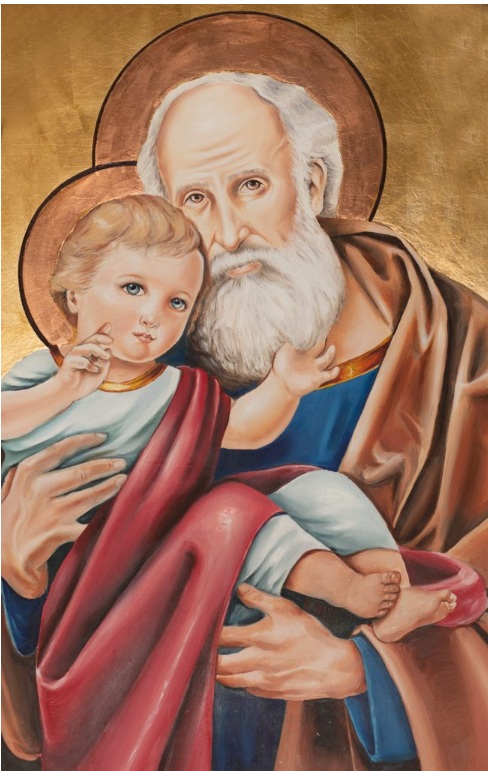
    مديح للقديس ماريوسف النجار
    السـلام ليوسـف النـجار
    خـطـيب العـذراء المـختار
    الـمـشهود له أنـه بـار
    ذو الـشـيـبـة و الـوقار
    هـو مـن نـسـل الأبرار
    مـن عـشـيرة داود المختار
    عـيـنـه الـرب بـاقتدار
    و خصه بـكـرامة ووقار
    عـيـنـه الـرب و ائتمنه
    يـكـون خـطـيـبـاً لأمه
    عـصـاتـه أظهرت علامة
    طـارت شـبـه حـمـامـة
    فـأخـذ مـريم الـصـبية
    الـبـتـول الـطاهرة النقية
    الى بـيـتـه بـكل حـنيه
    لتـتـمـيـم المـشيئة الالهية
    ظـنـوهـا زوجـة عـادية
    وهـى مـشـتـهية البتولية
    فـفـاضـت نعمة سمـاوية
    في الـنـاصـرة اليـهوديـة
    طـوبـاك ايـهـا الـبـار
    طـوبى لـبـيـتـك المختار
    فـيـه أتـت الـبـشرى
    بمـيـلاد فـادي البـشرية
    الـصـبـية حفظت في قلبها
    بـشـارة مـيـلاد ربهــا
    و يـوسـف نـظـر بطنها
    تـحـير و لم يـقـل لـهـا
    حـقـيـقـي هـو بــار
    كـمـا شهـدت عنه الاسفار
    لـكـن الأمـر جـعله يحتار
    فـلـم يـتـركه أب الأنوار
    الأمـر يـخـص الفـادي
    لـذا أرسـل مـلاك نـوراني
    يـطـمـئـنه بالحبل الالهي
    فـصـاح ده مـش استحقاقي
    هـا قـد اقـتنيـت الحقل
    الـذي يـســبى الـعـقل
    بـه الجـوهـرة الثــمينة
    يـسـوع غـالي الـقـيمة
    الـسـماء لن تنسى أتعابك
    و سـهـرك و تــرحـالك
    و بـذلـك في خـدمـتك
    و شـهـامـتـك و كمالك
    لم تـكـن أبـاً للــمسيح
    بـل أخـذت الـلقب صريح
    لا عـلـى سـبــيل المديح
    بـل تـكريماً لشخصك الخديم
    نـلـت كـرامـة الأبـوة
    و عـظـمـك الـرب يـقوه
    و أرسـل مـلاكه يـعلنك
    مـصـر تـكـون مـلـجأك
    و اصبحت الشخص المسؤل
    لـذا جـاك المـلاك مــرسول
    خـذ الـطـفل و أم النور
    و الى مـصـر قـم علـى طول
    لم يـعـين في مـصر مكان
    فـطـافـوها مـعاك يـا مقدام
    و تبارك وادينا و جبل قسقام
    بالـزيارة الفـريدة الـمنـال
    مـصـر يا بخـتك يا هناك
    بالـطـفـل يـسـوع لما جاك
    راكـبـاً ســحابه خفيفة
    هى الـعـذراء الأم الـعـفيفة
    يـوسـف ظـل يعمل نجار
    يـعـول الـصـبية و أبنها البار
    حـتى جـاء الوحي بالعودة
    و أتـاه المـلاك لـثـالث مـرة
    هـكـذا تم المـكــتوب
    مـن مـصر دعوت أبني المحبوب
    فـالـوقت في مصر قد طال
    و الـخـطـر مـضـى و زال
    أطـاع يـوسـف في الحال
    و أسـرج دابـتـه و قـــال
    يـا لهـذه الاتـعاب اللطيفة
    أرافـق الالـه و أمــه القديسة
    ورجـع مع العذراء و الغلام
    الـى الـنـاصـرة بـســلام
    و الـصـبي يـنمو في القامة
    ممـتـلئ نـعـمة و حـكمة تامة
    لـذا نـطـوّبـك بالألحان
    و نـسـأل تـوبـة و غـفـران
    من لـدن الـرب الـديان
    الـذي تجـسـد و صـار انسان
    و تـطـوّبك كل العذارى
    الـسـالـكـات بالبر و الطهارة
    يـا مـن صـرت مـنارة
    تـضـيـئ لجـميـع السهاري
    تـفـسـير أسفك في أفواه
    كـــــل الـمـؤمـنـين
    الـكل يقولون يا أله القديس
    يـوسـف النـجـار أعـنــا أجمعين


    St. Joseph
    St. Joseph Multimedia
    Song to St. Joseph
    St Joseph Hymn with Lyrics
    The Hidden Gems of The Nativity
    Saint Joseph the Carpenter - For Kids
    The Upright, St. Joseph the Carpenter
    History of the Ministry of Saint Joseph
    St. Joseph the Carpenter - Fr. Abraam Kamal
    الفضائل في حياة القديس يوسف النجار - أبونا أبرام كمال
    مشاعر وافكار النجار البار - أبونا أبرام كمال
    القديس يوسف النجار | أبونا شنودة مليكة