St Joseph Coptic Orthodox Church, Nashville

  Coptic Orthodox Church Overview  
  The Copt  

"Blessed is Egypt My People."

(Isaiah 19:25)

TheCopt01

The Coptic Church, also known as the Egyptian Church, is the oldest Christian church in the world. Established by St. Mark the Evangelist in the first century of Christianity, it has a history spanning over twenty centuries. Interestingly, the Old Testament contains a prophecy about the Coptic Church. In the Book of Isaiah, Chapter 19, the prophet speaks of an altar being set up in the heart of Egypt. This begs the question: why did our Lord choose Egypt for this sacred purpose?

Egypt, a land of unparalleled civilization and rich history, has a legacy that predates Christ by more than 3,000 years. The Bible mentions several key figures who visited Egypt, enriching its cultural and intellectual landscape. Among them are Moses, the renowned prophet who possessed a deep understanding of Egyptian wisdom; Abraham, the revered father of all nations; Jacob, the patriarch of Israel; Joseph, Jacob’s son; and the twelve tribes of Israel. Notably, the visit of the Holy Family at the beginning of Christianity, during the childhood of our Lord, marked the crowning point of these sojourns.

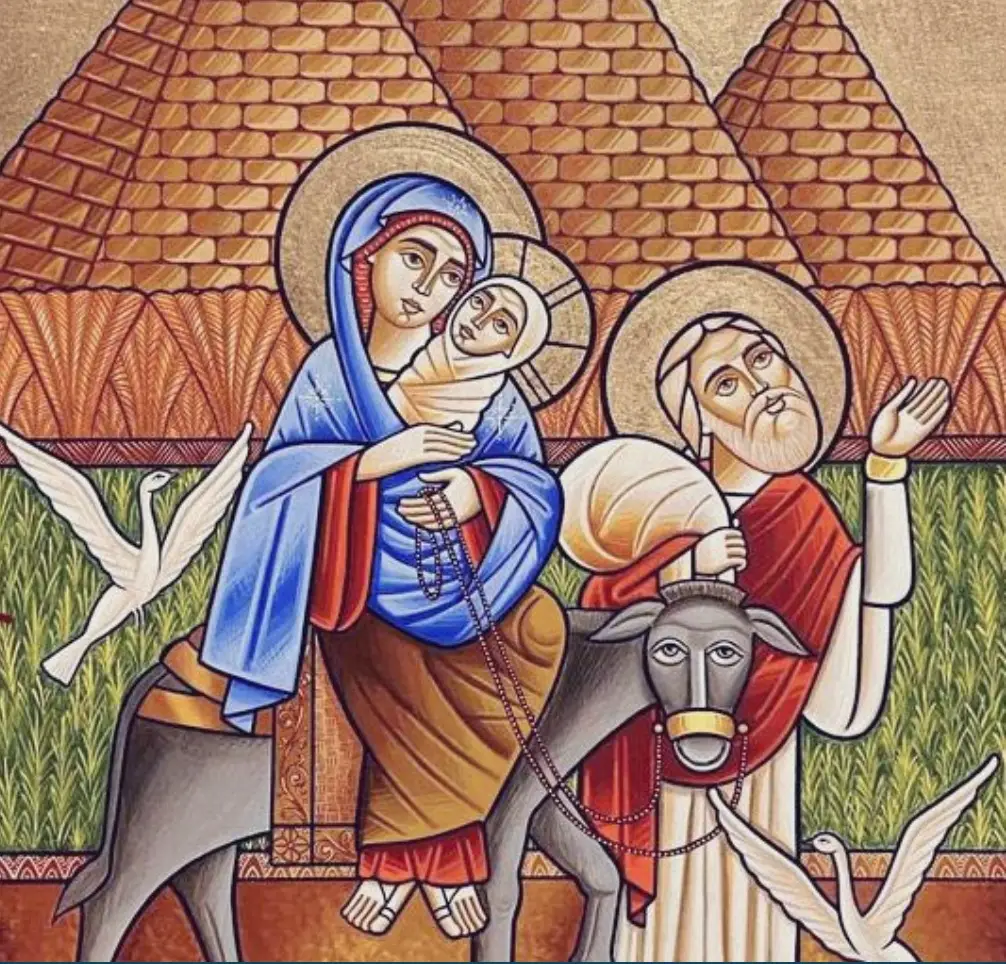
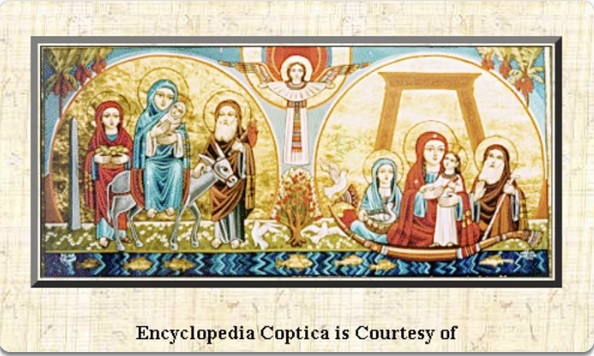
The visit of our Lord to Egypt was a blessing for the land, and it was the only country outside His birthplace that He visited. Numerous miracles occurred during this sacred time, and many places were imbued with divine grace. As a testament to this divine presence, numerous churches have been constructed in the locations where the Holy Family resided. These holy sites attract visitors from all corners of the globe, serving as sacred places of worship and pilgrimage.


Who are The Copts?


TheCopt01

The Coptic Orthodox Church is one of the most ancient Churches in the world, founded in the first century in Egypt by Saint Mark the Apostle and writer of the second Gospel of the New Testament. A conservative Church, it has carefully preserved the Orthodox Christian faith in its earliest form, handing it down through generations, remaining true to the Apostolic doctrines and patterns of worship. The Church’s spiritual approach emphasises holiness, Divine Mysteries and fellowship, rooted firmly in the canons of the Holy Scriptures, the apostolic and Orthodox creeds, the teachings of the Church Fathers and the first three ecumenical councils. Introductory Comments by Aaron Cárdenas These are early church documents from the Apostolic Fathers. Since they are not scripture, naturally the doctrine suffers. The only of these documents that I would recommend as sound doctrine is the 1st Epistle of Clement to the Corinthians [ca 96]. The letter is not without a few glaring inaccuracies, however. As for the rest of the letters, they have good teaching in places, but overall are lacking in accuracy. I will need to read the letters in more detail to make any more recommendations. The letters of Ignatius are difficult to judge with regard to doctrine, because they do not have much in the way of teaching. I've tried to limit these documents only to those written before 200 A.D. They came originally from a more complete list of Early Church Documents. However, some bits of editing were needed to format some of the links for the Web and correct errors in italicizing. I am referring to some of the letters referenced in the links, not portions of the NJB early church guide, which follow below. 1st Epistle of Clement to the Corinthians [ca 96]: A formal letter written on behalf of the Roman Christian community urging Christians who had been rebelling against church authority to be submissive and obedient. Tradition attributes it to Clement, allegedly one of the first bishops of Rome. 2nd Epistle of Clement to the Corinthians [ca 150]: Sermon thought not to be the writing of Clement himself. Advocates sound view of Christ, the resurrection, and holiness unto God. Enter into battle against the ways of this world, work out salvation through strength in Christ. The Epistle of Barnabas [ca 130]: This letter, probably not authored by the NT Barnabas, repudiates the claims of Jewish Christians at the time who advocated adhering to observance of the Mosiac Law. Argued that Christ provided salvation and man is no longer bound by the Law. Compares holy life to unrighteousness. The last part of this treatise consists of a form of the Two Ways Teaching also found at the start of the Didache. The Shepherd of Hermas [ca. 150]: Written by Hermas, who is believed to be brother of Pius, the Bishop of Rome. The Shepherd of Hermas is an apocalyptic document (in the sense that it claims to be revealed), modelled after the Book of Revelation. It deals with practical matters of church purity and discipline in second century Rome. The Epistle of Polycarp to the Philippians [ca 130?]: Polycarp was a church leader (bishop) in Smyrna, Asia Minor. Exhorted the Philippians to holy living, good works, steadfast faith. Interested in ministry and practical aspects of daily life of Christians. The Writings of Ignatius: Bishop of Antioch in Syria [ca 1-2 century] martyred in Rome by beasts (ca 105-116). On his way to Rome, he visits and then writes to various churches, warning and exhorting them. He also writes ahead to Rome, and writes to Polycarp, bishop of Smyrna. Warned the church against heresies that threatened peace and unity, opposed Gnosticism and Docetism. In the Epistle to Smyrna, insisted Christ came in the flesh not just in spirit.
Document prepared by permission of NJB Team. Aaron Bryce Cardenas. Copyright (c) 1994 by John Brubaker and Gary Bogart. Reproduction and/or distribution for noncommercial purposes is permissible providing that the guide is left fully intact. Please do not modify this document in any way without prior written consent. Send additions or corrections to the compilers at NJB@iclnet93.iclnet.org.
Introductory Comments by Aaron Cárdenas These are early church documents from the Apostolic Fathers. Since they are not scripture, naturally the doctrine suffers. The only of these documents that I would recommend as sound doctrine is the 1st Epistle of Clement to the Corinthians [ca 96]. The letter is not without a few glaring inaccuracies, however. As for the rest of the letters, they have good teaching in places, but overall are lacking in accuracy. I will need to read the letters in more detail to make any more recommendations. The letters of Ignatius are difficult to judge with regard to doctrine, because they do not have much in the way of teaching. I've tried to limit these documents only to those written before 200 A.D. They came originally from a more complete list of Early Church Documents. However, some bits of editing were needed to format some of the links for the Web and correct errors in italicizing. I am referring to some of the letters referenced in the links, not portions of the NJB early church guide, which follow below. 1st Epistle of Clement to the Corinthians [ca 96]: A formal letter written on behalf of the Roman Christian community urging Christians who had been rebelling against church authority to be submissive and obedient. Tradition attributes it to Clement, allegedly one of the first bishops of Rome. 2nd Epistle of Clement to the Corinthians [ca 150]: Sermon thought not to be the writing of Clement himself. Advocates sound view of Christ, the resurrection, and holiness unto God. Enter into battle against the ways of this world, work out salvation through strength in Christ. The Epistle of Barnabas [ca 130]: This letter, probably not authored by the NT Barnabas, repudiates the claims of Jewish Christians at the time who advocated adhering to observance of the Mosiac Law. Argued that Christ provided salvation and man is no longer bound by the Law. Compares holy life to unrighteousness. The last part of this treatise consists of a form of the Two Ways Teaching also found at the start of the Didache. The Shepherd of Hermas [ca. 150]: Written by Hermas, who is believed to be brother of Pius, the Bishop of Rome. The Shepherd of Hermas is an apocalyptic document (in the sense that it claims to be revealed), modelled after the Book of Revelation. It deals with practical matters of church purity and discipline in second century Rome. The Epistle of Polycarp to the Philippians [ca 130?]: Polycarp was a church leader (bishop) in Smyrna, Asia Minor. Exhorted the Philippians to holy living, good works, steadfast faith. Interested in ministry and practical aspects of daily life of Christians. The Writings of Ignatius: Bishop of Antioch in Syria [ca 1-2 century] martyred in Rome by beasts (ca 105-116). On his way to Rome, he visits and then writes to various churches, warning and exhorting them. He also writes ahead to Rome, and writes to Polycarp, bishop of Smyrna. Warned the church against heresies that threatened peace and unity, opposed Gnosticism and Docetism. In the Epistle to Smyrna, insisted Christ came in the flesh not just in spirit.
Document prepared by permission of NJB Team. Aaron Bryce Cardenas. Copyright (c) 1994 by John Brubaker and Gary Bogart. Reproduction and/or distribution for noncommercial purposes is permissible providing that the guide is left fully intact. Please do not modify this document in any way without prior written consent. Send additions or corrections to the compilers at NJB@iclnet93.iclnet.org.


The Heroes of Faith & Persecution


When St. Athanasius was a deacon, he led theological discussions at the First Ecumenical Council, Nicea I, in 325 A.D. He authored the Christian Creed and led the 318 Coptic bishops at the council. Four years later, he became the Pope of Alexandria, defending the divinity of Jesus Christ in his four-volume work, Contra Arianus. St. Jerome warned that the world would have fallen into Arianism if the work hadn’t been written. Exiled four times, Athanasius traveled to gain support from bishops and holy synods to maintain the faith. When he was exiled a fifth time, the Emperor could not carry out the order; thousands of church members protested, refusing to surrender their Pope.

Under the authority of the Eastern Roman Empire of Constantinople, the patriarchs and popes of Alexandria led Christian theology. Invited everywhere, they spoke about the faith. St. Cyril, Pope of Alexandria, presided over the Ecumenical Council in Ephesus in 430.

The Coptic Church of Alexandria’s greatest glory is its Cross. The Copts accept persecutions, hardships, and sufferings for Christ’s words, “If anyone desires to come after Me, let him deny himself, and take up his cross, and follow Me.” (Matthew 16:24) The Church carried the Cross throughout its history from St. Mark to every generation of Christianity. It has remained steadfast and unchanging in its faith.

As a result of this faith, countless martyrs have come from the Coptic Church. Among them are St. George, St. Mina, St. Moses the Strong, St. Abanoub, St. Anastasia, St. Catherine of Alexandria and thousands more.

The Coptic Church & the Council of Chalcedon


The Coptic Orthodox Church & Monastic Life


TheCopt02

Egyptian monasticism involves prayer, contemplation, solitude, worship, and purity of heart. Monks live a calm and quiet life, detached from worldly concerns, all devoted to God.

The Church of Alexandria pioneered monasticism in the late 3rd and early 4th centuries. St. Anthony (251-356 AD), the world’s first monk, was a Copt from Upper Egypt. St. Bachomius (292-348), the founder of the cenobitical system, was also a Copt. He was an Egyptian soldier who converted to Christianity after receiving compassionate treatment from Christians in Diospolis (modern-day Esna). He became a disciple of St. Palemon and established many monasteries with over 8000 disciples.

The development of monasticism occurred in the following stages:

  1. In the Apostolic age, many believers practiced asceticism, seeking the perfection of the Gospel without withdrawing from their families or communities.
  2. The church’s eschatological attitude reflected believers’ eager longing for their Bridegroom’s advent, leading them to live in virginity and devote themselves to worship as a spiritual preparation for the heavenly wedding feast.
  3. Some felt the need for a spiritual atmosphere and left cities to live in simple huts in villages, known as ‘devotees’ since the word ‘monk’ was unknown. They lived according to their own orders.
  4. St. Anthony outlined the pattern of the anchoretic life.
Monasticism flourished in Egypt, with hundreds of monasteries and thousands of cells and caves scattered across the deserts.

St. Macanus of Egypt (300-390 AD) and St. Shenouti the Archmandrite (348-466 AD) were among its founders. They accompanied St. Cyril of Alexandria to the third Ecumenical Council of Ephesus. St. Pishoy, born in 320 AD, became a monk at twenty and departed in 417 AD. John Cassian, the founder of monastic life in France, reported hearing monks, hermits, and anchorites praying and singing hymns along the Alexandria-Luxorin route.

St. Paul, the Egyptian hermit, was the world’s first anchorite, living without seeing a human face for about eighty years.

Their spiritual life sought a true homeland in Heaven. We inherit this from our fathers: the first church in Alexandria inherited the glory of ancient Egypt, and we inherit the glory of our Church.


Source: Posted by St. Mary Church, East Brunswick NJ