Many Churches celebrated the Feast of the Nativity of our Lord and His baptism on the same day until the end of the 4th century, when a decision was made to celebrate the events separately. As a whole, the Feast of the Epiphany was of extreme importance to the Church, particularly in Egypt, a day when the Patriarch of Alexandria would announce the commencing days of the Great Lent, the Passion Week (Pascha), and the feast of the Resurrection for that year, to which all the churches of the world would follow.
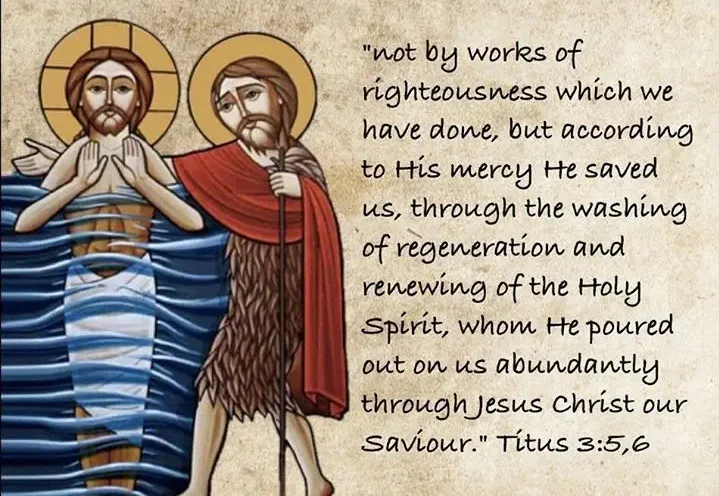
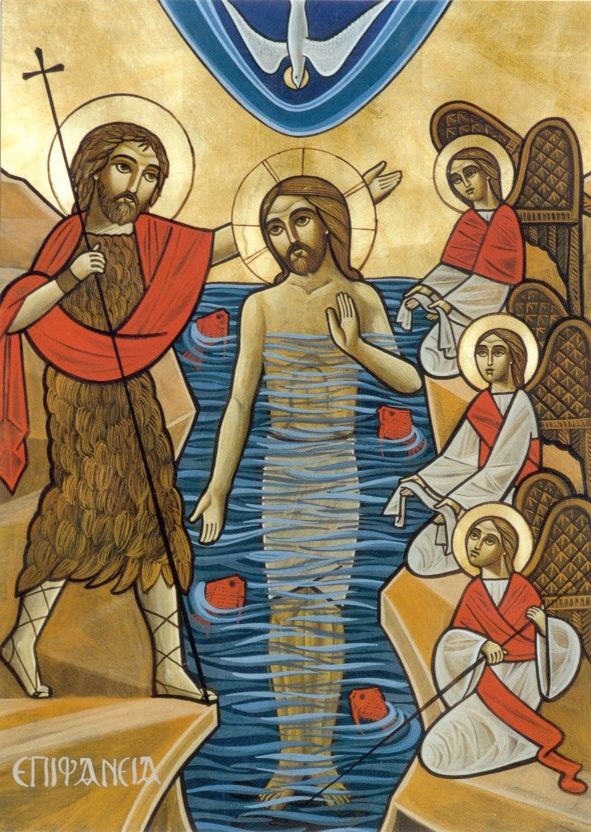
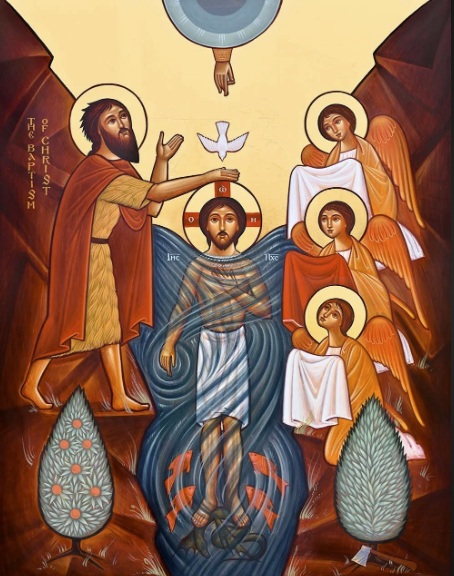
On this day, the Lord Christ was baptized in the River Jordan by John the Baptist, not for repentance, as the rest of the world, or because of His need to, but rather on the behalf of and for the sake of humanity, as well as revealing to us the Holy Trinity, transfigured and glorified. St. Luke speaks of this in his gospel saying: “Now when all the people were baptized, and when Jesus also had been baptized and was praying, the heaven was opened, and the Holy Spirit descended upon him in bodily form like a dove. And a voice came from heaven, ‘You are my Son, the Beloved; with you I am well pleased’” (Lk. 3:21-22). From these verses, we notice that through the baptism of the Lord Christ, the heavens were opened once again after Adam was prevented from returning to the Garden of Eden. The Holy Trinity is also revealed to us in this passage; the Father by His voice and witness to Christ, the Son baptized in the River, and the Holy Spirit descending in the form of a dove on the Lord Christ.
Rite
In the Rite of the Epiphany, the following must be taken into consideration:
If the Paramony (Preparation) of the Epiphany is more than one day long, the Paramony readings must be repeated, even if one of those days is a Sunday. the Paramoun (Paramony) of n is prayed in the year-round tune.
If the Feast of the Epiphany is celebrated on a Monday, this means that the Paramony will start on Friday and end on Sunday. The Vespers of the Paramony is prayed on Thursday and not on Friday, since the liturgy on Friday must be completed by sunset. Vespers Prayers may be prayed on Saturday.
If the 12th of Tobe (the second day of the Epiphany) is on a Sunday, the readings of the second day of the Epiphany are read instead of the assigned reading for the day.
The Feast of the Epiphany is celebrated for two days, the 11th and 12th of Tobe. Prayers with the joyous tune start on the 11th and end of the 13th, the day on which the Feast of the Wedding of Cana of Galilee is celebrated.
The prayers in the Paramony of the Epiphany differ only in that the Verses of Cymbals and Doxologies for the Epiphany are chanted, as well as the Gospel Response specific to the Epiphany following the reading of the Gospel. At the end of the Vespers and Prime Offering of Incense, the creed of the completion of the Epiphany is recited. The liturgy is prayed in the similar manner as the annual one, except for the Gospel Response (which is again specific to the Epiphany), the Fraction of the Epiphany, and finally, the creed of the completion of the Feast of Epiphany.
In the Epiphany Vespers Offering of Incense, the prayers are chanted in the joyous tune. The introductory of the Adam or Watos Verses of the Cymbals is chanted, followed by the verses specific to the feast. Doxologies start with the two verses of the Epiphany, followed by the 2 Doxologies of the feast and Doxologies as deemed fit, All Doxologies are chanted in the joyous tune. The Psalm is also chanted in the joyous tune, followed by the Circuit Psalm of the Epiphany for both the Vespers and Prime Offering of Incense, and the Psalm Response. After the reading of the Gospel, the Gospel Response specific to the Vespers/Prime prayers of the Epiphany is chanted. The prayer is concluded with the Concluding Canon of the Feast of Epiphany.
Feast of the Epiphany — Lakkan (Blessing of the Water)
During the Lakkan (the Rite of the Blessing of the Water) for the Feast of the Epiphany, the Prayer of Thanksgiving is prayed, followed by the Verses of the Cymbals appointed for the Lakkan in the joyous tune, the Lord’s Prayer, Psalm 50, and the hymn of Alleluia: Ⲁ̅ⲗ̅ : Ⲇⲟⲝⲁⲥⲓ ⲟ̀ Ⲑⲉⲟⲥ ⲩ̀ⲙⲱⲛ ("Alleluia. Glory be to our God.").
The prophecies are then read, followed by the hymns
Ⲧⲁⲓ ϣⲟⲩⲣⲓ (Tai Shori, "This Is the Censer")
and
Ⲧⲉⲛⲟⲩⲱϣⲧ (Tenouosht, "We Worship"),
followed by the Pauline Epistle (Boulos).
Upon the completion of the Pauline Epistle, the hymn
Ⲟⲩⲣⲁⲛ ⲛ̀ϣⲟⲩϣⲟⲩ (Ouran en-Shoushou, "A Heaven Full of Joy")
and the hymn
Ⲡⲁϭⲟⲓⲥ (Pachois, "My Lord")
are chanted.
The Trisagion follows:
The first verse response: ⲟ̀ ⲉⲕⲡⲁⲣⲑⲉⲛⲟⲩ ⲅⲉⲛⲉⲑⲓⲥ (O Ekparthenou Genethis, "O You who were born of the Virgin")
The second and third verse response: ⲟ̀ Ⲓⲟⲣⲇⲁⲛⲟ ⲃⲁⲡⲧⲓⲥⲧⲏⲥ (O Iordano Baptistis, "O You who were baptized in the Jordan")
This is followed by the Litany of the Gospel.
The Psalm and Gospel are then read.
The priest prays Ⲫϯ ⲛⲁⲓ ⲛⲁⲛ (Efnoti Nai Nan, "O God, have mercy on us"), while the deacons respond with Ⲕⲉ̅ (*Kyrie eleison, "Lord, have mercy") ten times in the melismatic tune. During this time, the priest blesses the water with the sign of the Cross three times.
Kyrie Eleison (Lord Have Mercy)
After Ⲕⲉ̅, the Gospel Response of the Epiphany Lakkan is chanted.
The Seven Long Litanies are then prayed, commemorating:
The Fathers
The Sick
The Travelers
The Heavens
The Leaders
The Departed
The Oblations
The Catechumens
The prayers conclude according to the rite of the Lakkan of the Feast of the Epiphany. Following the Orthodox Creed, the Adam Aspasmos of the Epiphany is chanted.
At the conclusion of the Lakkan, the priest anoints the congregation with the blessed water, while the deacons chant Psalm 150 in the joyous tune.
Prime Raising of Incense
The Prime Raising of Incense follows the structure of Vespers with the following differences:
The introductory Verses of the Cymbals are chanted, and Ⲧⲉⲛⲟⲩⲱϣⲧ (*Tenouosht, "We Worship") is chanted as part of the Morning Doxology.
The Litany of the Departed is omitted. Only the Litanies for the Sick and the Oblations are prayed.
After the Litany of the Sick, the hymn of the Seven Ways is chanted, followed by the second part of the Adam Prime Doxology.
The service concludes with:
Ⲛⲉⲕⲛⲁⲓ ⲱ̀ Ⲡⲁⲛⲟⲩϯ (Neknai O Panouti, "Your mercies, O our God")
Ⲡ̀ⲟⲩⲣⲟ (Epouro, "O King")
Divine Liturgy of the Feast of the Epiphany
In the Divine Liturgy of the Feast of the Epiphany, the Hymn Ⲡ̀ⲟⲩⲣⲟ is chanted during the Procession of the Lamb.
The Offering of the Lamb immediately follows without Psalms, while the deacons chant the Offering’s Alleluia hymn (Alle-el-Qorban).
After the Absolution, the hymns
Ⲧⲁⲓ ϣⲟⲩⲣⲓ (Tai Shori, "This Is the Censer")
and Ϩⲓⲧⲉⲛ (Hiten, "Through the Intercessions") are chanted.
The Epiphany-specific Hiten is included here and concludes with Ⲧⲉⲛⲟⲩⲱϣⲧ, after which the Pauline Epistle is read in the joyous tune.
The Praxis Response is chanted after the Catholic Epistle. The hymn Ⲟⲩⲣⲁⲛ ⲛ̀ϣⲟⲩϣⲟⲩ is then chanted after the Synexarium.
This is followed by Ⲡⲁϭⲟⲓⲥ, and then the Trisagion in the joyous tune:
ⲟ̀ ⲉⲕⲡⲁⲣⲑⲉⲛⲟⲩ ⲅⲉⲛⲉⲑⲓⲥ
ⲟ̀ Ⲓⲟⲣⲇⲁⲛⲟ ⲃⲁⲡⲧⲓⲥⲧⲏⲥ
The Litany of the Gospel is then prayed, followed by:
Psalm in melismatic Sangari tune
Psalm Response
Gospel reading
Epiphany Gospel Response
Following the Prayer of Peace, the Adam Aspasmos of the Epiphany is chanted. Before the Trisagion, the Watos Aspasmos of the Feast is also chanted.
The priest then prays the Fraction of the Epiphany. Psalm 150 is chanted during Holy Communion.
The Divine Liturgy concludes with the Concluding Canon of the Feast.
Second Day of the Feast of the Epiphany
If the second day falls on Wednesday or Friday, fasting without abstinence is permitted. No prostrations (metanoia) are made.
The Vespers and Prime follow the structure of the Eve of the Epiphany.
Only the Litanies for the Sick and the Oblations are prayed in the Prime.
In the Adam Morning Doxology, the verses Ⲧⲉⲛⲟⲩⲱϣⲧ and Ⲡⲓⲟⲩⲱⲓⲛⲓ ⲛ̀ⲧⲁⲫ̀ⲙⲏⲓ are omitted.
Divine Liturgy follows the Feast structure with these differences:
Third and Sixth Hours are prayed before the Offering of the Lamb
Ⲕⲉ̅ is chanted 41 times
Then Trisagion and Lord’s Prayer follow
If time permits, the Offering’s Alleluia hymn may be chanted.
The remainder follows the normal order of the Feast.
May the blessings of this feast be with us all. Amen.
Source:
The Heritage of the Coptic Orthodox Church
Coptic Transliteration & Naming Standards
Spelling reference, pronunciation,
English titles, URLs, and classification of Coptic hymns, prayers, and liturgical
responses used throughout this website.